
Theatre figure Vladyslav Troitsky: Ukraine is not Russia, it is Europe; but who are we, what is our subjectivity?
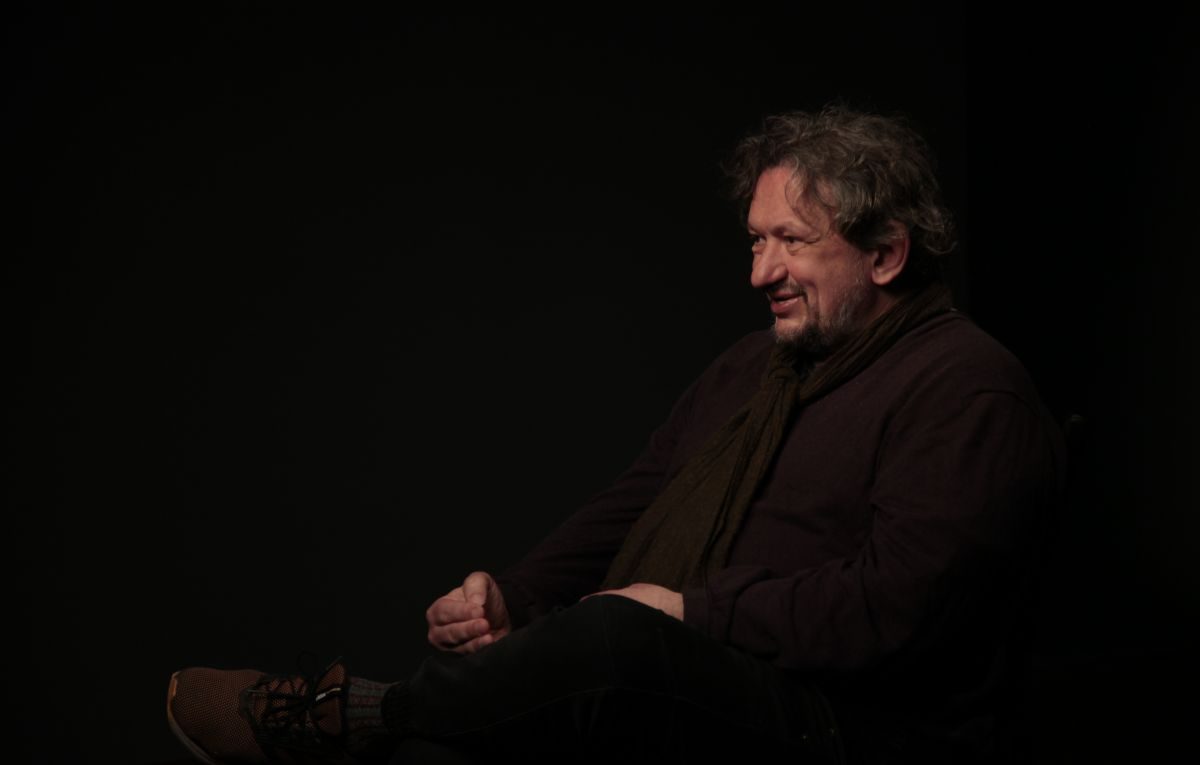
Troitsky believes Ukraine has failed to formulate an idea in 30 years: who are we and what could unite us?
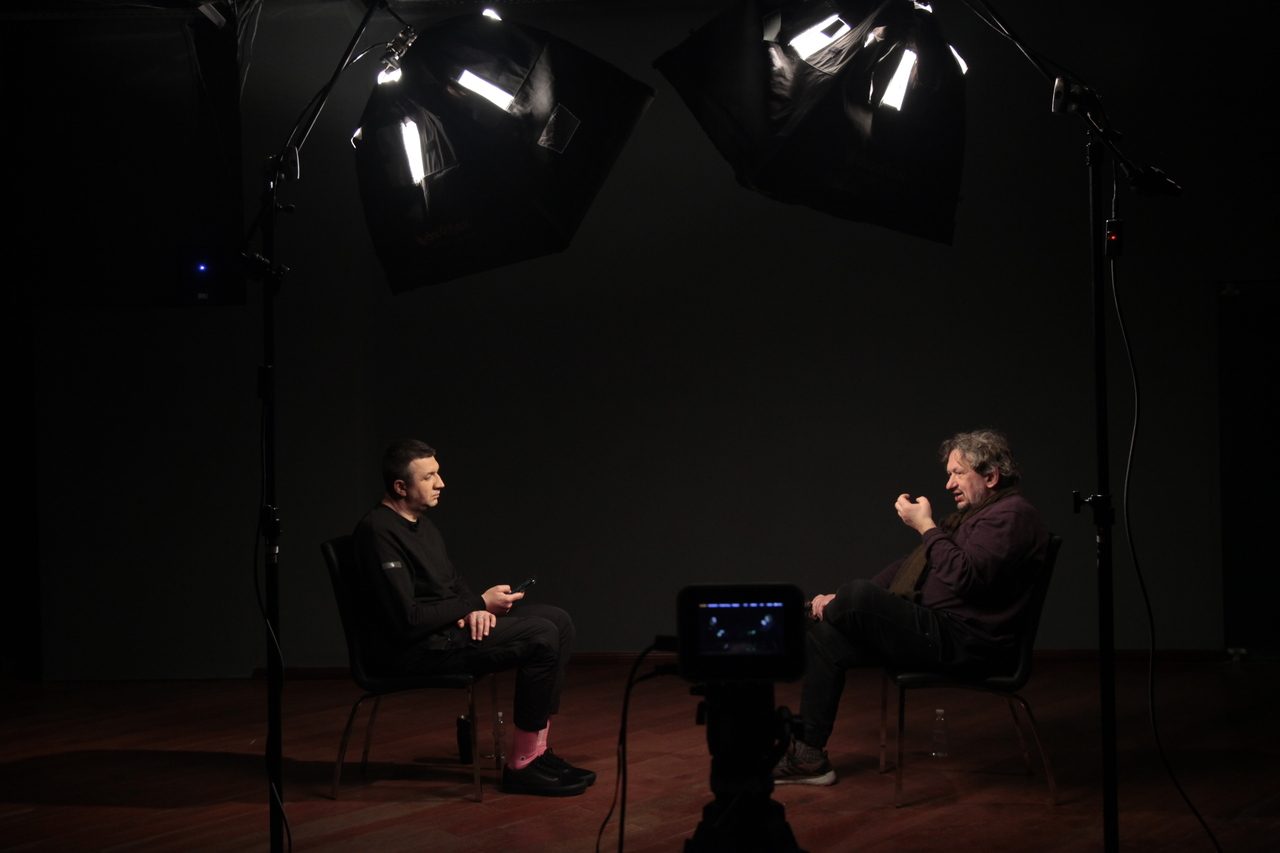
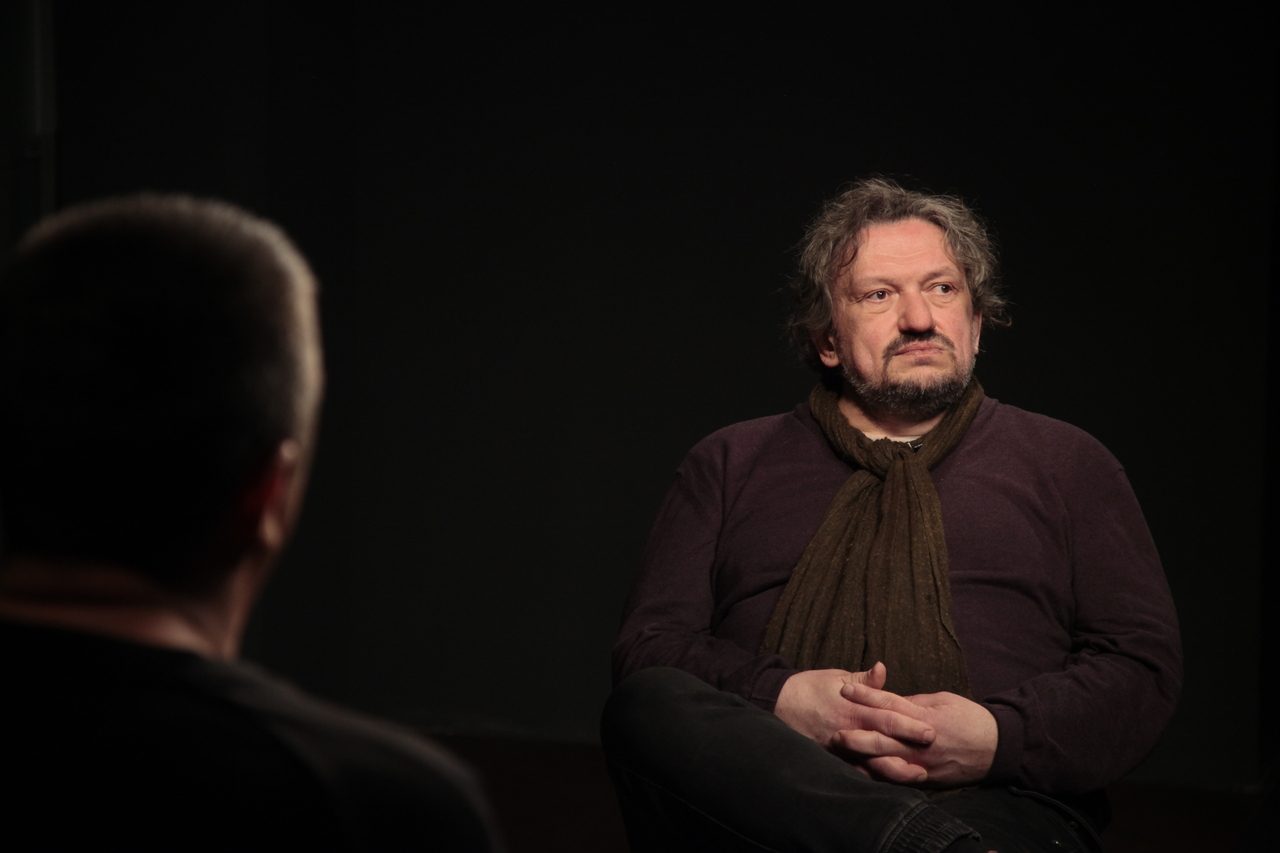
In a new episode of the program “Antipodes” on the Iceland TV channel, Ukrainian theatre actor, director, playwright and TV presenter Vladyslav Troitsky talked about culture in Ukraine, GogolFest, Ukrainian identity and shared his ideas for the development of the state.
If we take Ukraine as it was in 2014 and as it is now in 2021. How different are these countries?
You know, actually this question can be answered formally very quickly. A big difference. Back then there was an acute sense of war, now an acute sense of the beginning of a big war. Basically they are somewhat alike. On the other hand, there is more of a sense of the country as a country. At the same time, lately I have been thinking a lot about how in 30 years we have not formulated an idea. Who are we?
There are two ideas: Ukraine is not Russia, which Kuchma formulated in his book; and then later: Ukraine is Europe. But objectivity gets lost in this. So what is Ukraine? I wonder why it is, how come it has turned into something like Poroshenko’s “Language, Faith, Army”, thereby cutting off a certain part of people who do not support these theses.
What could unite us? Who are we? What is our subjectivity? Why is it like this? Recently, while working on a production, we came up with the opera “Re:post-opera LE”, dedicated to the 150th anniversary of Lesya Ukrainka, and I suddenly realized that, damn, at the end of the 19th century, yes, there were few of them, the so-called Ukrainian intelligentsia: Lesya, the “Koryfeiv” theatre, Drahomanov, Lysenko, Franko, who dreamed up Ukraine.
Dreamed up, because back then talking about Ukraine as a country was on the edge: it was either absolute utopia or madness. They were romantics. But they were educated romantics. Romantics who knew many languages and tried to introduce the Ukrainian-language space into world culture. Because before that, apart from folk songs, there was practically no culture of Ukraine of its own.
There was the Mohyla Academy line, but that was still more a church history than a humanities one. As for Ukrainian, not particularly. There were some small spaces, Kotliarevsky’s “Eneida”. That is, it was still small, exotic things, some whims of certain nobles.
To create a space that would shape urban culture, well, the state in any case determines urban, urbanistic culture. The formation of this urban culture was, in fact, done by these 30-40, up to 50 people who cared about it. That is, these are the people, that heritage, which, in theory, we should lean on, on the shoulders of these people.
But it turns out that you really want to quote Lermontov: “Yes, there were people in our time, not like the present tribe: you are not the heroes!” But people who, roughly speaking, know five languages, that is like Lesya translating from five, Franko, I think, translated from ten languages. But now I don’t think there are many of them. And in general the intellectual, spiritual, visionary context is not about now.
I think, why did this happen? I love to quote Stus, who said that Ukrainian culture starts from zero every time. Why? Why is the memory so short? Why, even during the 20 years of independence, when remarkable events took place in the humanitarian and cultural sphere, they were immediately washed away, as if they had never existed?
The same amazing, fantastic festivals of Serhiy Proskurnya, which happened, and they were really very cool. He has left us. Few now remember the same festivals of Oleh Skrypka, “Country of Dreams”, the festivals of Yaroslav Fedoryshyn, “Golden Lion”. All of that happened.
Perhaps because for us it was exotica, which we perceived as something new and exotic. But our attention was not focused on it. Perhaps the answer is in another phrase of yours. You said that all state institutions in Ukraine are a replica of the Soviet Union. But aren’t people, society, a replica of Soviet society? Are you and I a replica of the Soviet system or not?
I hope not entirely, personally. I think that I, fortunately, have eradicated from myself what Chekhov spoke of: “Squeeze the slave out of yourself drop by drop”. I think that I myself, thank God, have squeezed it out as unnecessary. But culture, which, in theory, should be at the forefront of all changes, should be either a stalker who throws pebbles showing where to go, or a visionary.
In fact, state culture, which states are concerned with, is essentially reactionary, not even conservative, but reactionary to about 95%. You just understand that there are no visions in the minds of these institutions. They perform some habitual function of entertainment, and it is not very clear for whom.
Have you ever asked yourself how to even define the cultural product that state institutions produce? It is produced with our money. It is not that they are all so wonderful; it is state money, and not used very efficiently.
I would say it is kitsch, in the bad sense of the word.
Yes, right. But now look, you, as a taxpayer, can influence, so to speak, the state’s order. It pays for this and says, this is us, through financing these institutions and financing the product they say, eat, please, to your health. You can’t even say this agenda doesn’t exist in society.
That is, if we can still somehow discuss education, medicine, security, because you have clear criteria, then in culture there are no criteria. Any theatre will tell you: “Listen, do people come to us? They do. What else do you need? We stage, for example, the same Lesya or the same Franko, and that’s it. So we are fulfilling this function.”
What function? Who formulates these tasks? Is there any feedback at all, apart from buying tickets? Because to this argument that people come, I will tell you: “Well, guys, people also go to Oleh Vynnyk’s concerts, he fills stadiums, roughly speaking, the Palace of Sports without any problems.” And a bunch of “she-wolves”. Or Olya Polyakova’s. “She-wolves” in flip-flops, that is your audience.
And further reflections continue: the official ideology, the cultural ideology of Ukraine, is in fact the “hymn of the boor”. Why, you may ask, such an aggressive formulation, why do I allow myself this? Because I think one of the most terrible things we have is the university of culture named after comrade Poplavsky.
I am not against Poplavsky, for God’s sake. If he were some quirky, independent showman, well, thank God, let him be whatever. But when he performs an official state function as rector of the university of culture, taking on this function, in fact, of a swineherd.
And here is an image for you: salo is our mascot, horilka, varenyky and girls nearby, naked. And here is your criterion of success. And when he now announces “don’t take the ZNO, we’ll admit you, it doesn’t matter at all what your education is, it doesn’t matter at all what you read or what you watch.”
You go and in this brew, which broadcasts that Ukrainians are actually an image invented in Stalin’s times, a khokhol who is sly, boorish, dim-witted, and so on. And then all this excess superstructure, all these Franko, Lesya, Kurbas, all of it goes to the scrap heap, and only this dominant remains.
So that there is a vyshyvanka, yeah? It is not even an attribute, rather an accessory of a person. And that they produce compound feed instead of artists, that is a different question.
Again, for this to change in any way, society needs some dialogue, to create some kind of vacuum again, so that new content rushes in. And on the other hand, a new mythologeme of Ukraine has begun to form.
What is it? Again, when speaking abstractly: Ukraine is Europe. Which Europe? Is it Hungary? Poland? Germany? France? The Scandinavian countries or Italy? Romania? Albania? Which of these Europes do you mean when you say the word “Europe”?
These are all different countries, with completely different rules of the game and relations in society. Even at the level of theatre: the theatre in France and the theatre in Germany are built on completely different models.
I think you are digging somewhat deeply, because for a very large number of people Europe is a place you can go to pick strawberries or bring back a kravchuchka. Sadly enough. And so I have a question for you in this regard.
You created what I consider the most successful private theatre in Ukraine, not a state theatre, but a large cultural hub that has given rise to a multitude of interesting projects. For whom? Is your audience, the audience you have, capable not just of consuming what you do, but also of giving appropriate feedback? Including financial feedback?
You are just talking about a niche that should take shape, and into which new culture could go, into this vacuum. Are people ready for this?
Look, here we go again. I often talk with TV people who don’t watch television themselves, but say: “Our audience is like this, they will watch, roughly speaking, something like ‘Dizel Show’, for example.” Okay, fine. But has anyone systematically offered other content, quality content? No. So there is no supply, so there is no market.
Well, you understand, sorry once again: if a pig, sorry, again, if a pig eats compound feed, there is no point in switching it to anchovies.
I can put it in a slightly different metaphor. For example, remember that 15 years ago the very concept of drinking wine in Ukraine was exotic. Now the wine shops in Ukraine are more attractive than in Paris, with more choice. And this happened in just 15 years. That is, the culture of perception has changed.
Although, roughly speaking, 20 years ago you would come to where they drink horilka, you would bring wine, but it was some sourness, or “give us something sweet, port, and cheap at that”, or pears and apples, but horilka is still better. Or polish it off with a little beer.
And further, as I was talking with Yurko Nazaruk, you know “!FEST”, well, they began to develop a culture of beer consumption. I am not a beer lover and I don’t drink horilka, but just as a phenomenon, that is, you actually start to offer a different product, craft beer, which is different, you don’t get wasted on it.
It implies a different culture of consumption.
Yes. And it is the same with theatre, the same with music. A phenomenon. Finally people have started talking about Oksana Lyniv, who, I assure you, just two years ago, when I asked even intelligent people, do you know such a girl, Oksana Lyniv? No, of course not. Now, thank God, she has appeared in the media space. It is drop by drop.
The other thing is that I now have an idea to do this systematically, to gather respected people of all kinds and raise this discourse, so that this dialogue emerges. About who we are, what the genesis of our culture’s development is, how it touches on the same folk culture, folklore, primitive art and so on.
Even studying religious thought itself, that is, forming this basis on which we stand, and becoming aware of it. And this is not just chatter, these are very concrete things, because as soon as people start talking about the same Lesya or Franko, or studying the same Kurbas, not some mummy forgotten by everyone, but an active figure.
That is, the same Ohlobyn, whom my teacher, one of the most fantastic directors in Ukraine, was, is forgotten. And I understand that as soon as we throw out the heritage that existed, and there is something to be proud of, we are not living in some desert. There is something to be proud of. Then simply take this, somehow preserve it, give it to your children, and keep growing something new.
That is, you should not bow and keep chewing over yesterday all the time. I am not saying go off into a deep study of Franko and spend your whole life on it. Rather, someone must do it, absolutely. That is, you must have a genesis. Intellectual, spiritual. And then you get that ideology, not in the form of a primitive ideology where everyone must be left to right or right to left, roughly speaking. Although, on the other hand, I became interested in such a phenomenon as comrade Dugin.
Russian? We know him.
I also kind of heard of him, but always in passing. I knew he was one of the ideologists of the Russian world. But I started to actually study him when I suddenly came across his lectures on theatre at the Moscow Art Theatre.
There was a very strong scandal then.
Yes, I know. And there is Prilepin, an absolute devil, who fought in Donbas and publicly said that he killed. Of course, it seems like toxic material, so under no circumstances. But on the other hand, I understand that fundamentally they provide a certain ideological space and support for the Russian world quite seriously in this space of Russia.
Moreover, through some propaganda, they, relying on this very philosophical paradigm, begin to manage the so-called Western useful idiots. And if you have not studied this, what can you counter them with?
So for me this became a trigger that tells me: “Yes, okay, I have to watch this, I have to listen to it, I have to understand it in order to build a reasoned counter-dialogue.” Even within our society.
Because we cannot speak with simple templates like “Ukraine is not Russia” until you have defined for yourself, fundamentally and comprehensively, who you are.
First, why? Second, and if not, who? And third, justify it.
Yes. Understand the basis, understand the genesis, this whole history. And the fourth level, when, beyond talk, you formulate it into certain actions. Even GogolFest was absolutely a crazy private initiative. We are the “DAKh” team, and when we did the first one in 2007, we intuitively seized from Russia the Gogol agenda for the 200th anniversary of Gogol.
Because it turned out the event itself was much more fundamental, brighter and, moreover, the genesis continues. And the GogolFest festival entered the top five festivals in Europe in 2017 or 2019. By the way, regarding Gogol, this is about the mythologeme of Ukrainian culture and people. I just started to reflect, I do a lot of work on Gogol. Here is an interesting point: Gogol has, conditionally, four stages of creativity. The first, Little Russian or Ukrainian, where all those “Christmas Eve”...
Four why? There are three. The first is Little Russian, then the Petersburg “The Nose”.
“The Nose”, then “Dead Souls”, and the fourth, when, already under deep Orthodoxy, he wrote “Selected Passages from Correspondence with Friends”. So, the difference between these four periods. In the first period all the heroes, all the characters, are big people. They are personalities. It doesn’t matter, Taras Bulba, Khoma, Vakula, Solokha, these are all big people.
There was the Petersburg period, well, trash people, constant abominations, noses and so on. That is not human history. Then he starts travelling more and writes “Dead Souls”, between Russia and the West, between his trips. And at once distance appears. These characters are negative.
Well, but these are archetypes.
But they are people, again people appear, but already when distance from Russia appears. And then a heavy hand and Orthodoxy, when it becomes an absolutely obscurantist story. Although he is very talented. He even staged two performances based on “Selected Passages from Correspondence with Friends.”
But still you understand that his narrowed space and sense of freedom, which was in the first, Little Russian or Ukrainian, period, is simply overflowing with life energy. And here there is no life energy, there is only moralizing. And that is interesting.
Yes, he, of course, left for Russia, but let’s look at the genesis of development of his heroes. This is an unconditional argument about who’s who. The toxicity of the Russian world. At the very least.
His Petersburg period is horror. That is, these are strong works, but the people, as you said, are trash. That is, these heroes, this is a feeling, I don’t know, I had this feeling in Luhansk. In 1987. You know, it’s like Salvador Dalí’s paintings presaging civil war, when a conglomerate of some body parts.
This again, I actually lived for only one year in Svetlodarsk, which is in the Luhansk region, or rather the Voroshilovgrad region. Svetlodarsk is near Debaltseve, Uhlehirsk. That was 1977. Back then I lived there for just one year, my parents moved to Pripyat, and I entered a physics and mathematics boarding school. Interesting sensations there were.
The world there is very strange. On the one hand, it is very aggressive; on the other, a lot of intelligentsia, engineers, worked at the Uhlehirsk hydroelectric plant. And this combination of intelligentsia and precisely this lumpen proletariat gives, of course, a volatile mix.
And in Donetsk and Luhansk too I have many acquaintances, and now people who have left from there. I talk with them, you know, there is one thing about them that is very captivating for me: they have directness. That is, they have no second layer. They say what they think. And honestly, I like that.
I am from Luhansk myself, so don’t take offence. Look, a person from the outside looks and says that this is an absolutely inherent trait of ours. Because here, in Kyiv, you say something and that’s it, ten people get offended, and those ten people tell twenty others so that they also get offended with you.
There is that directness. Well, this is also such a bugbear: the lad said, the lad did, Donbas doesn’t talk nonsense. We have to understand that.
And is this part of culture too?
Of course. You can say that it doesn’t exist, that it’s all nonsense, that it’s not needed, and keep dismissing it all the time. Roughly speaking, if you have a patriotic narrative that is more connected with Western and partly central Ukraine, then all those people there are “vatniks” and all of them are worthless people. Then you cut off the very concept of democracy.
That is, you are trying to use the narrative of, say, Orbán’s Hungary or Duda’s Poland. But Hungary and Poland are monolingual and mono-national. There are no such political branches there. Moreover, there is this complex of former empires. Hungary had a complex after the First World War, when it lost almost 60% or 70% of its territories. And this consolidated them.
I simply worked a lot and lived in Hungary. That is why I saw this genesis, how it developed for them, when it was an unhappy country, and then, on such a strong nationalist narrative, it began to bloom. In fact, Hungary’s economy grows the fastest in the European Union. Very amusing, but that is how it is. And a sense of happiness.
I just remember that 12-13 years ago Budapest was so depressed, not to mention Debaltseve. Now you arrive; in 2019 I was there; everything is full of life. But this case won’t work for us. It won’t work. So either you accept that all these people who are in Odesa, in Dnipro, in Kharkiv, in Mariupol, in Lviv, Uzhhorod, Ivano-Frankivsk are all of us, we are united. What unites us? That is the key question. How to unite, how to find what is common?
Do you know the answer?
You know, again I had utopian ideas, since I am a romantic utopian at heart. I had some idea that Ukraine could be, I came up with such a term, an offshore for passionaries. At least in the humanitarian sphere.
That is, you create free cultural zones, not economic, but cultural zones, which invite all sorts of directors and artists from all over the world, who will there be fooling around. You give them a little money, just a little, and they will arrange all sorts of “Burning Mans” for you.
Like Silicon Valley, but for artists.
Artists, humanitarians of all kinds. And it should not be in the state sector, but they should be loyal and be funded a little by the state. And I understand that my case with GogolFest, when during interventions in other cities or in Kyiv, when we invited our Western partners, they said: “Cool, there are such opportunities here that we have long lacked.”
On the other hand, you have the opportunity to meet with a young audience. If you go to a theatre in Switzerland or in Paris, the audience is 60-70+. Dandelions. Or 5% of some youngsters. Here we have youngsters, and they are hungry. But state culture cannot offer them such a product. Or it tries to say: “Eat our Ukrainian, so to speak, film, or whatever, I don’t know.” Well, young people don’t watch TV, that is clear, they roam around on YouTube, Facebook, TikTok.
Our state says: “Whatever you find is yours.” Basically you have the basics, you have buckwheat, bread and something else. Compote, cookies. That is your base. If you want something bigger, you have to look for it yourself.
Yes, but you see, the point is that in our country there is not a single space yet for the development of this whole independent thing. Although I have a bold idea now, and I am trying to lobby for it in various ways. We are planning this year to bring GogolFest back to Kyiv, to such a sacred place as “Suspilne”, in the “Pencil”.
“Pencil” is not just a building but the whole territory, and in fact an unexplored territory. There are simply fantastic opportunities there. But when I walked around the territory, there is, by the way, a bomb shelter, and it is working. There is a director of the bomb shelter. Everything is tidy there. There is water, and the toilet works.
Well, you know, something has to work at “Suspilne”. If television doesn’t work, at least the bomb shelter works.
Well, it doesn’t matter. In short, there is a lot of empty space there. “Suspilne” itself is not able to generate anything, there is no resource, no efficiency and so on. It cannot. My idea is very simple: launch various independent theatres, musicians and artists there. Give them one hryvnia each for rent. One hryvnia a year. Let them pay for utilities.
And they generate content that “Suspilne” can film, or they will film it themselves. And channel it, for example, to the digital platforms of the same “Suspilne”. Lectures, master classes, performances.

Russian Attacks in Dnipropetrovsk Region: Two Killed, Seven Injured

Defense Forces Strike Four Russian Drone Control Points in Past Day, Including in Berdiansk

Britain Threatens Sanctions on Kremlin-Linked People; Poland Ready to Hand Ukraine Ammunition

Russia says it has completed "planned exercises" in the Black Sea

MVD: Fake Riots With Prop Blood Were Being Prepared Near Presidential Office

Law Enforcers Name Another Klitschko Deputy as Suspect

Berlin Holds Protest Against War in Ukraine; EU Prepares for Possible Russian Halt of Gas Supplies
North Korea Fires Ballistic Missile Over Record Distance in Five Years
Irish Fishermen Force Russia to Postpone Naval Drills

US sanctions in case of invasion of Ukraine could completely destroy Russia's economy, NYT reports
