
Volodymyr Kohan, “Khashchi”: Ukrainians are themselves to blame for what is happening in Ukraine
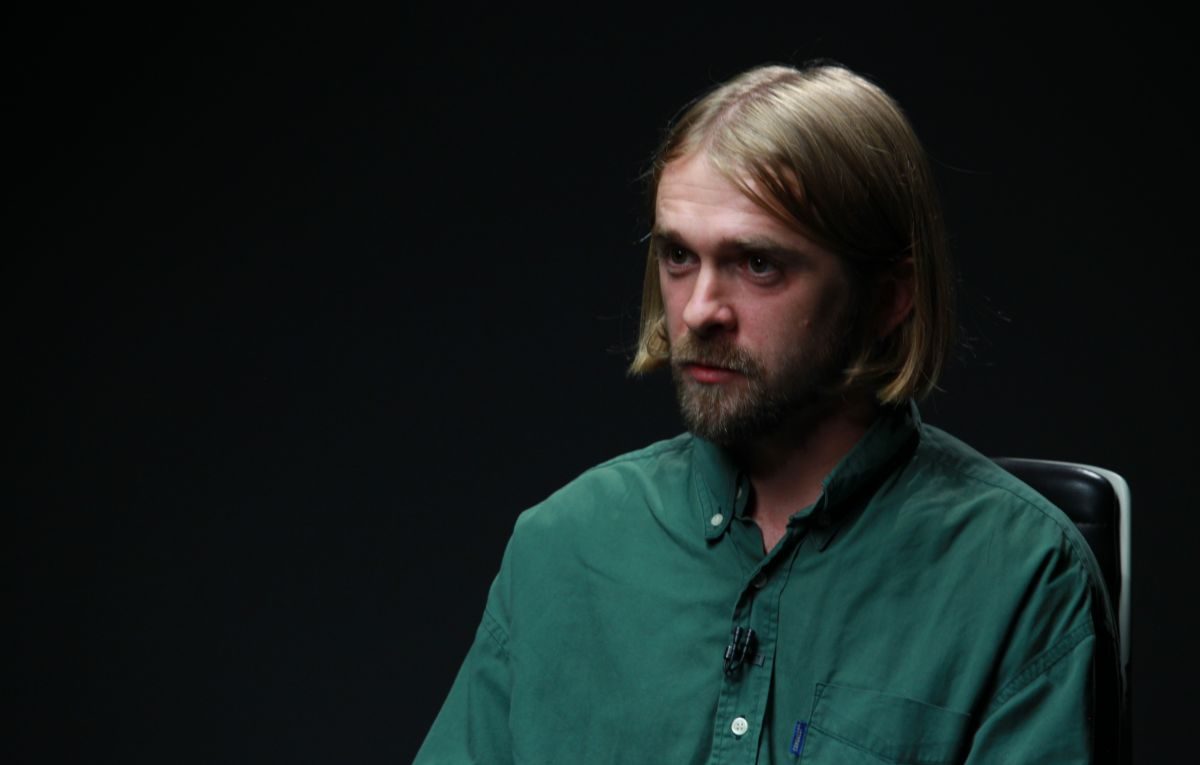
In his view, everything is tangled up: the poor are poor because they are stupid, and stupid because they are poor.
In a new episode of the program “Antypody” on the Iceland TV channel, Volodymyr Kohan, host of the YouTube channel “Khashchi,” spoke about those responsible for what is happening in Ukraine, his attitude toward nationalists and the decline of Ukrainian villages.
What is killing Ukraine the most? What is the main danger factor?
Probably, I will say an unpopular thought, something unpleasant for many, but the root cause of this whole state of affairs in Ukraine, if it weren’t so cruel to say, is the population of Ukraine. People are themselves to blame for what is happening.
Due to people’s somewhat inaction or wrong choices, wrong decisions, some poverty and stupidity, poor because stupid, stupid because poor, it’s all tangled up. Then some huge snowball gathers and rolls on and on. And you look and see that nothing can be stopped.
But when you start unraveling it and looking for the cause, it all comes down to the fact that at one time the people were lazy, passive, or made the wrong choice. And then it all got tangled up. For such words, Ukrainian nationalists will probably not like me the most, because it’s an unpopular opinion. But again, I say this is subjective, maybe I’m wrong.
We are not interested in the opinion of idiots, let’s speak plainly, we are interested in the opinion of people who think. Because conscious Ukrainian nationalists, who have some kind of intellect, understand the objective problems and the obvious problems.
If a person does not understand something obvious and objective, it means they prefer to live in some other dimensions, and this then affects this dimension later.
I’ll tell you a secret: maybe from 2009 to 2014 I considered myself a rabid nationalist. In essence, I was on the right. Maidan changed me, when I came across many nationalists and became disappointed in them, and yet until 2019 my attitude toward nationalists was significantly better.
I lived in Kamianets-Podilskyi in Khmelnytskyi region, and the nationalists I know are still there, mostly ideological people who genuinely care about Ukraine. And I did not understand why everyone in Kyiv hates nationalists.
And when I once crossed paths in Kyiv with Russian-speaking little brats on the prowl... whose jaws are literally twitching from some fan or something, so hyped up, and their main goal is simply to smash someone’s jaw, mush in the head. Well, it’s just fashionable, mainstream. Sniffing some stimulants and roaming around Kyiv. Hanging around gay marches, coming to beat people. What are you proving, dude?
Go on, I don’t know, some “Shvydko Hroshi” or such, which drag Ukrainians into credit slavery. They go chase some lesbian girls somewhere around Bankova and beat them. That’s what I see in Kyiv. But I still have many friends and acquaintances from right-wing forces, though these are my acquaintances from 2009 to 2014.
So these are conscious people?
To a large extent, yes.
So these are not the ones you talk about, like the right-wingers in Stone Island jackets listening to Morgenstern?
Yes. They really do listen to Morgenstern. They have some Stone Island jacket label. Many of them. But you can’t judge all nationalists in Kyiv like that, because there are very many of them, and the general picture is something like this. Some perception. Damn, something’s not right. It really makes you ashamed. I think I’ll go to the march on October 14. But what for, and where...
My son told me a story about a guy who also wore a Stone Island jacket, and some guys asked him for his clothes. They ask for clothes very often, and he pretended to be deaf and mute. That’s it, they said, “oh well, sorry, go.” And he walked on, went 10 meters, took out his headphones, and they saw him and caught up. That was the story.
He thought he had gotten away with it. Damn, did I say anything superfluous? Because I live in Kyiv. Now you’ll walk and someone will say, “hey, bro, you agreed.” Although sometimes I think they’re so right-wing, but for the same right-wing ideas, for restoring Ukrainian history and knowledge of history, damn, I don’t want to boast.
Well, “upa-unso,” that’s it, a lot has been said here. And as for the Sich Riflemen, who Mykhnovskyi was, Konovalets, or Dmytro Dontsov, they’ve never heard of them in their lives. But they know what Stone Island is.
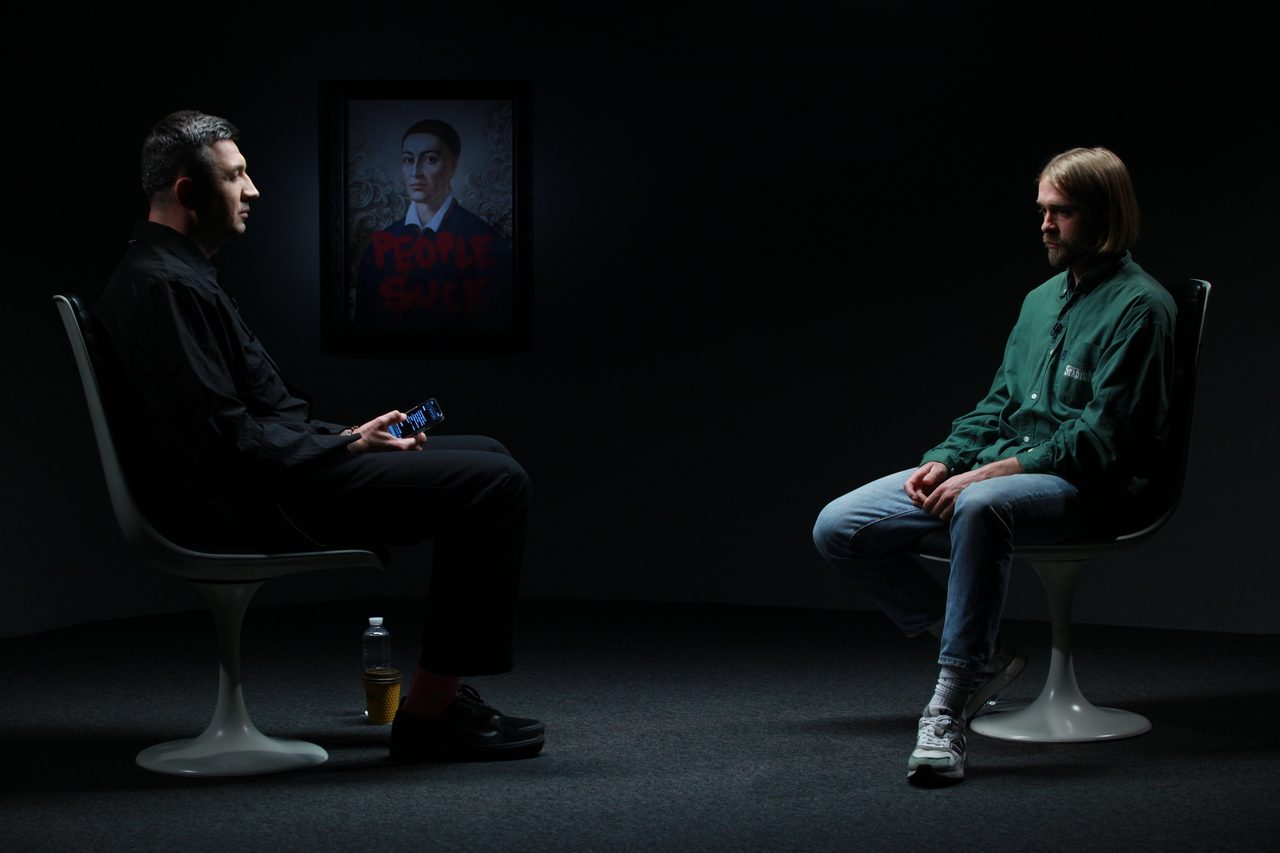
There is a widespread view that Ukraine appears as a victim of centuries-long rape by occupying regimes, Russian and Soviet. In your view, which of the occupying regimes brought Ukraine the most problems and grief?
Well, of course, it’s popular among us to blame everything on the Soviet era. It was undoubtedly a tragic period, but no matter how you twist it, this is also partly true. People write to us in the comments that even the housing stock of modern Ukraine is 80% Soviet-built, and the railways, everything. That is, industrialization, mechanization, and all the benefits of civilization were in essence brought in under the Soviets. But at the same time, there was also a lot of grief from them.
So, my personal opinion is that the harshest and most terrible occupying regime was still the Russian Empire. It was after the March Articles, when the Hetmanate finally fell apart and the “brothers” came to us, that the worst began. Now people remember that the Soviets destroyed this and that. But let’s be honest: in the late 1920s and early 1930s, this policy of de-Ukrainization...
In that period, I think, more Ukrainian-language books were printed than now. Ukrainian-language films were made. In power in Ukraine, the Central Committee heads in the regions were mostly ethnic Ukrainians. That’s the late 1920s. The early 1920s, yes, there was a huge Jewish and Russian presence, but mostly they were Ukrainians. And then I recently started digging on the internet to see how many Ukrainians there were in the leading bodies of the Soviet Union.
It’s just outrageous. There were only the main ones, and Gorbachev had some roots there, and Khrushchev. It’s outrageous. And we pin everything on them, as usual. The Russian Empire, yes. It really banned the Ukrainian language at the official level, which the Soviets never did. And language is the soul of a nation.
I think it was the Russian Empire that instilled in us this inferiority complex, this village lackey who, having come to the city, has to adapt to the master. This continues even now. It can be traced among young people, and it’s terrible. Especially among the hipster Nefor youth. Nefors, all sorts of hipsters, always want to be fashionable, on-trend.
And, conditionally, you go to a concert at that Closer and meet people who speak Ukrainian... And then you start digging into them: Cherkasy region, Vinnytsia, Rivne, Lviv, why are they all Russian-speaking? And this pressure, pressure, this lump from the late 17th century, lasted until the end of World War I, when the Russian Empire really pressed on us. I think it brought the most grief.
Because that same Zbruch. They lived 20 years less under the Soviets, but the difference is immediately colossal, in management, in the desire to own private property. The “Khashchi” project in Transcarpathia, in Lviv region, in Chernivtsi region, is practically impossible there. It’s hard to find abandoned houses and dead villages there. There is no slave mentality there to such an extent.
But why, again, did the collective farm mentality take root here? Nothing can grow in unfavorable soil. Likewise, the Soviet system took root where its adherents defended it most. This is central, eastern, and northern Ukraine, where the Russian Empire rolled through the most and left its greatest influence.
Which place from all your expeditions made the saddest impression on you?
Kropyvnytskyi region, that one, Kirovohrad. Maybe it happened that way because we went there in the same chill as now. Plus it was, in a way, a family-search expedition. I went with a friend. I studied my genealogy at one point, who I am by origin and where from. And I found that my great-grandmother, fleeing famine in 1932, migrated to Odesa and began living there.
She was from Kirovohrad region, and I started looking for her village. I found it on the map, on old Soviet maps. It’s not on Google, nowhere. We went and started searching, and there is no trace of this village at all. In the cemetery there are maybe 10-15 crosses left, mostly without plaques. And nothing, just bare steppe all around. Somehow so sad, depressing, outrageous.
And the village: the last resident died there sometime in 1978. We film a lot about dying villages. I can’t answer everyone in the comments. Many Russians come in, you know, “what’s up with the khokhols,” they come to laugh, to see how bad we all are. They don’t see what’s going on at home. And they blame it on us, saying we got what we deserved on Maidan, that “your independence” led to the extinction of villages.
But nobody has tried to simply pick up some literature, that dreary Wikipedia, just gather information on when these villages began dying out, and figure out the causes. The villages really began dying out en masse in the 1970s. This locomotive, this bullet, was launched then, and now it simply continues by inertia. Now globalization has given freedom.
The Soviets artificially kept these peasants, not giving them passports or anything. And then they were given freedom, especially in the last 10 years. I tracked this from 2010 to 2020, a colossal outflow. I think no statistics exist, and nobody is really doing this. As far as I’m concerned, it’s not difficult. Call every village council and gather the real number of residents, not by voters, as they count now.
Damn, in my native village in Khmelnytskyi region, if I’m not mistaken, there are about 600 voters. I sat down with an old woman who lives in the village and said, “count all the people in the village for me.” She counted and got to about 350, including children. They are registered there, some since 1980. Maybe there’s no one alive there anymore. And half the village stands with empty houses. There are no statistics.
At times we try to collect these statistics. We were in Zhytomyr region, and I started counting: there were 30 empty houses for every one inhabited. Just outrageous. People go to take photos in the Chornobyl zone. The Chornobyl zone is some kind of Disneyland. Although we ourselves filmed there, trying to feel something. Interesting, but there is no such mournful tragedy there as in the rest of Ukraine.
You feel that it was a healthy young organism that was suddenly relocated to live elsewhere. But in these villages you feel that everything has simply gone out. It died, and everyone was indifferent.
So you even feel this agony there?
Yes, for me it’s eerie and frightening there, a mix of emotions. But in Chornobyl there was no such thing. Maybe because of the tourists, there are buses, there are magnets, here scarves, everyone rides and rolls around. Well, Disneyland, Sofiyivka park in Uman. There’s nothing left there anymore, they’ve looted everything in that Chornobyl, even in the most remote villages. Stalkers and all that. There are more tourists there than, I don’t know, in Hryboiv near Odesa.
They’ve taken absolutely everything. And yet no one wants to look at what’s, conditionally, 60-70 kilometers off the highway, 2-3 kilometers to the side, and the same Pripyat after Chornobyl. There are no five-story buildings like in Pripyat, but private houses. In Pripyat these artificial, built-up buildings from the late 1970s, I think, haven’t soaked up the human spirit. Well, some kind of little empty places, papier-mâché.
And these primordial houses of ancient Ukrainian villages that stood there for hundreds of years. People were born in them, died, there were families, they kneaded bread, this milk soured, these smells. You walk in, and it feels like that smell is still there. And then at one point it all got cut off, because the grandson, for one reason or another, became some Russian-speaking hoodlum, moved to Kyiv to Troieshchyna, and sits there. He doesn’t care, he left his photos of relatives behind.
For me, one of the saddest episodes of your projects is the one about Sumy region. When I watched Sumy, I recognized Luhansk region there. Luhansk region also borders Russia, by the way, and at the beginning of the video you mention that Sumy now ranks first in length of border.
In Luhansk region the border is 800 kilometers, and in Sumy it’s, it seems, some 500-odd kilometers. Especially when I saw this bus station. The bus station is actually in Krasnyi Luch, there is such a city, now under occupation, Zorianske. That is, all these disappearing places, in fact. And I recognized all of this.
And when I was watching this video, a thought came to me: is this not the decline, the curse of the border towns and villages with Russia? How much of this decline comes from Russia? Are we ourselves coping?
Right off the top of my head I can name three or four similar bus stations: in Vinnytsia or Khmelnytskyi region, Kirovohrad, Cherkasy, which have no border with Russia at all. But is there this diffusion, this penetration of the Russian thing? Of course, there is. We need to research this more. In fact, we haven’t really been to the border regions with Russia much.
We still have Kharkiv region ahead of us, we still have Luhansk region ahead. I’ve had it in mind for, probably, a year already, but because all the guys work, we only get away on weekends, two days, three at most. We can’t go far to Luhansk. You need 5-6 days for that. I’m very drawn to the north of Luhansk region, that’s Starobilsk, Novopskov.
Somehow on Lukianivka, about five months ago, I worked at a hostel as an admin. I took a side job there for ridiculous money, but the main goal was to brush up my English to talk with foreigners. There were many people from all over Ukraine. They kept coming, and Okhmatdyt is right nearby, kids were brought to the hospital.
I was really doing some sociology, watching who came from which regions, how they came in without knowing me, what language they spoke, how they behaved, how they reacted when I addressed them in Ukrainian, and whether they switched to Ukrainian. That’s a separate topic.
Two women came in. The language was so interesting. I scanned their passports and saw it was from the north of Luhansk region, I don’t remember exactly now, some village. I googled the village and saw it’s two kilometers from Russia. A Ukrainian village right on the border with Russia. And their language goes like: “come on,” “don’t wait,” “why are you there.” It’s somehow strange, like in Soviet films where they showed Ukrainian, somehow like that. Not surzhyk at all. You know Kurgan Agregat? They’re from Kharkiv region. I don’t know whether they do it for fun, or whether they talk like that in Bliznyuky.
In fact, in Milove the border runs right along the street. Right on the street. There used to be a prosecutor’s office there, an old building. And, conditionally speaking, people were arrested in Ukraine, while the toilet was on the street in Russia.
I think this is the ideal state of affairs, just so you understand how everything is there. So you can count on help. I’d even go to Svatove with you to look and show.
I had in my head that Luhansk region is a completely Russian-speaking region. And she says, “in our village everyone speaks like this.” And I thought that the border villages were all Russian-speaking. I really want to go there and shoot a film. I understand that everything is dying there, but it can really lift the spirit, to show what Luhansk region is really like, not what they foist on us.
I think you’ll be pleasantly surprised, because the north of Luhansk region was not so decayed. On the contrary, it was relatively full-blooded, and there were powerful farming households. That’s exactly why the referendums did not take place there…
Because the farmers said, “May, what referendum, dude, we’ve already taken out loans, we have to plant.” Roughly like that, the “Russian world” shattered against Ukrainian pragmatism in the north of Luhansk region. Well, that’s how I think. Plus, of course, one wants to believe in some ideological nuances as well.
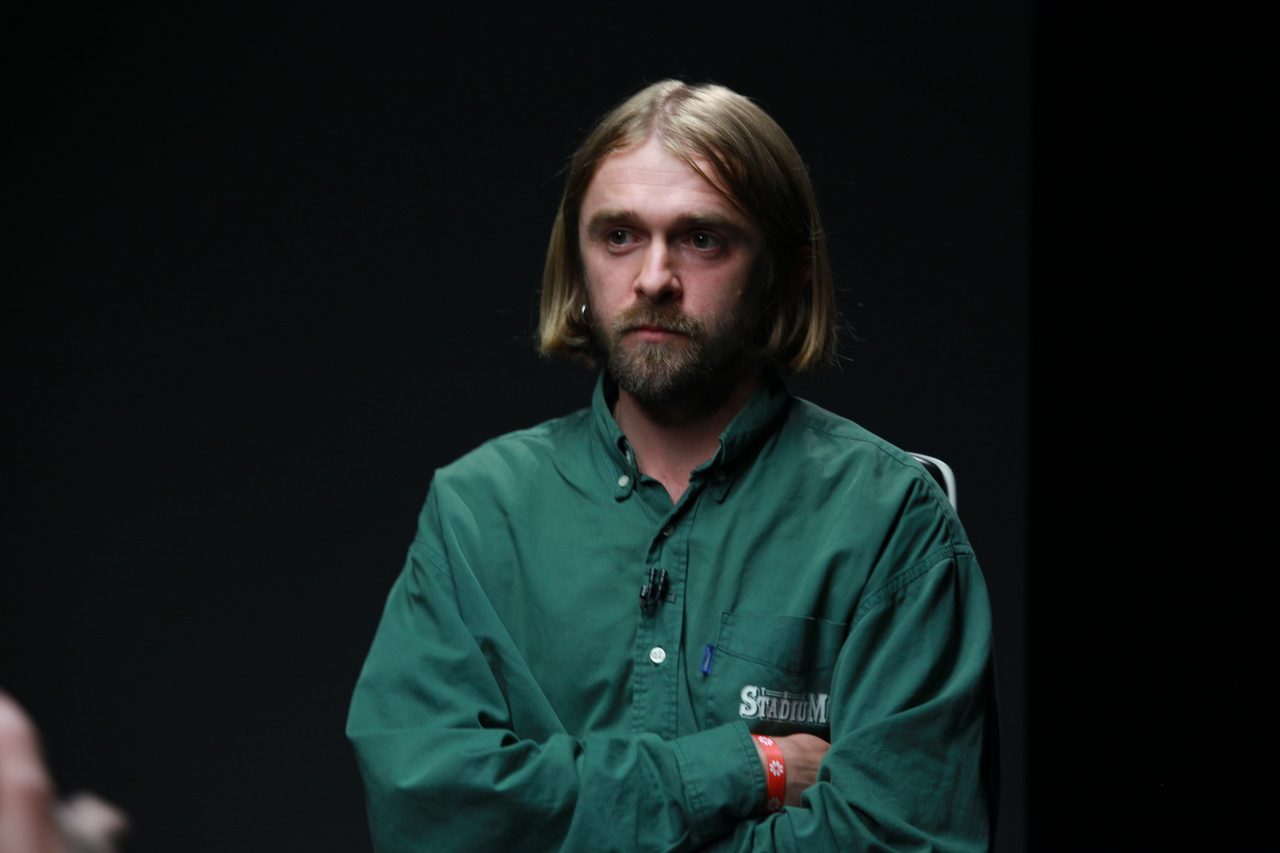
The episode about the Old Believers also struck me, and struck me how... Because part of my family are descendants of exactly that Old Believers settlement in Zhytomyr region. In my family I was the first to be baptized. My dad was even baptized according to the old rite.
When I watched how people talk, I had the feeling that they’ve lived there for a very long time, two hundred years, and somehow manage to preserve their identity.
Instead, when a Ukrainian, and again I’m going to say unpleasant things, but it’s a fact, comes to Russia, he assimilates and dissolves into the local ethnos, into local identity. Maybe this is even good, because we are somehow more adaptable. Why is that, in your opinion?
Why, I don’t know. I always look for answers to this question too. But this is one of the biggest troubles of Ukrainians.
But in Canada it’s not like that, and in America it’s not like that.
Canada is a separate topic. Why do we dissolve in our own country? You know how it is with Armenians, the biggest Armenian city on the planet, someone says Yerevan, no, Moscow. I once read statistics that in Moscow, if you look at it this way, there are up to two million ethnic Ukrainians.
Some people manage to move from Khmelnytskyi region to Khmelnytskyi city and start speaking Russian. And on social networks, probably half of people write in Russian. Of course, it’s already better, getting better. I myself was Russian-speaking until I was 20 too. I lived in Odesa, my family spoke Russian, but I switched when I came to the village.
When I went out in public, to Kyiv, to some Gothic concerts, of course I switched to Russian immediately. I understand these people. I sometimes can’t explain it in words. It’s a complex, a feeling. Well, you don’t want to stand out. A person is still a herd creature and wants to be like everyone. Few freaks want to stand out.
Because it is considered that Ukrainian is the language of the village.
Conditionally, it was imposed for many years. And Ukrainian still sounds, probably, linguistically rougher than Russian. People say it’s very soft. I lived abroad, did side jobs in hostels, and volunteered. I say to a Briton, “I speak this in Russian, and this is in Ukrainian.” People told me, “your Ukrainian is rougher.”
Maybe our language is like that because we were always oppressed, while they are on the rise. Also, the Russian language, or their linguists, their philologists, or just the people, they don’t shy away from novelty, from innovations in the language. And we have many of those, which I call “Farionists” on Facebook, those who are so fanatical about the language. You say one word, and they say, “what are you saying ‘da’ for, it’s disgusting to listen to, there’s no ‘da’ in the Ukrainian language, only ‘tak’.”
Dude, each region is different, and that’s normal. What is called “motuzka” in Podillia is “kanat” in Kharkiv region. And this is not surzhyk, what they imposed on us. Surzhyk, surzhyk, let’s be ashamed of surzhyk. In Germany I was once blown away, traveling around Germany, that guys from Bavaria barely understood guys from near Berlin. I’m like, come on, seriously.
Transcarpathia.
Well, we understand them still, I think much better. And now in Zhytomyr region there is a peculiar dialect. We do have surzhyk, of course, when a person says something like “shchas meni navyerno nuzhno.” Well, that’s obvious surzhyk. It’s hard now, I’m not a philologist or a linguist, but you feel it when there is a dialect.
A person is more ashamed of dialects. Surzhyk, in essence, poured into the Ukrainian language among the masses with the arrival of the Soviets, with the advent of mass media, with the appearance of television, when people began to travel en masse to the cities. My great-grandmother spent her whole life practically never leaving her village.
And also the image of such a funny khokhol who speaks surzhyk was cultivated.
It was cultivated, but where, in some circles, in the theater. And earlier, when people were isolated in villages, they didn’t care who laughed at them, they were completely self-sufficient. On TV the announcer spoke Russian. Then it was Russian, and Russian again, and that clever one went off and became an officer, or the military were held in high esteem for many years.
In the village, people respected whoever: the stableman Ivan, or the one who had risen to some sergeant in the Armed Forces of the Soviet Union. He came in uniform and everyone in the village walks around him. And he speaks Russian. He starts throwing these words around. My grandmother is 80 years old, and sometimes she says “nazhar kartoshky.”
I say, did your mom also say “kartoshka”? No, my mom said “nasmazh barabolia.” Barabolia is again a dialect, because the official Ukrainian is kartoplia. But we also have krumpelia, bulba, barabolia. And kartoshka is already surzhyk.

Russian Attacks in Dnipropetrovsk Region: Two Killed, Seven Injured

Defense Forces Strike Four Russian Drone Control Points in Past Day, Including in Berdiansk

Britain Threatens Sanctions on Kremlin-Linked People; Poland Ready to Hand Ukraine Ammunition

Russia says it has completed "planned exercises" in the Black Sea

MVD: Fake Riots With Prop Blood Were Being Prepared Near Presidential Office

Law Enforcers Name Another Klitschko Deputy as Suspect

Berlin Holds Protest Against War in Ukraine; EU Prepares for Possible Russian Halt of Gas Supplies
North Korea Fires Ballistic Missile Over Record Distance in Five Years
Irish Fishermen Force Russia to Postpone Naval Drills

US sanctions in case of invasion of Ukraine could completely destroy Russia's economy, NYT reports
