
“We May Never Know Where It Came From”: Scientists Fear Determining the Origin of COVID-19 Is Becoming Impossible
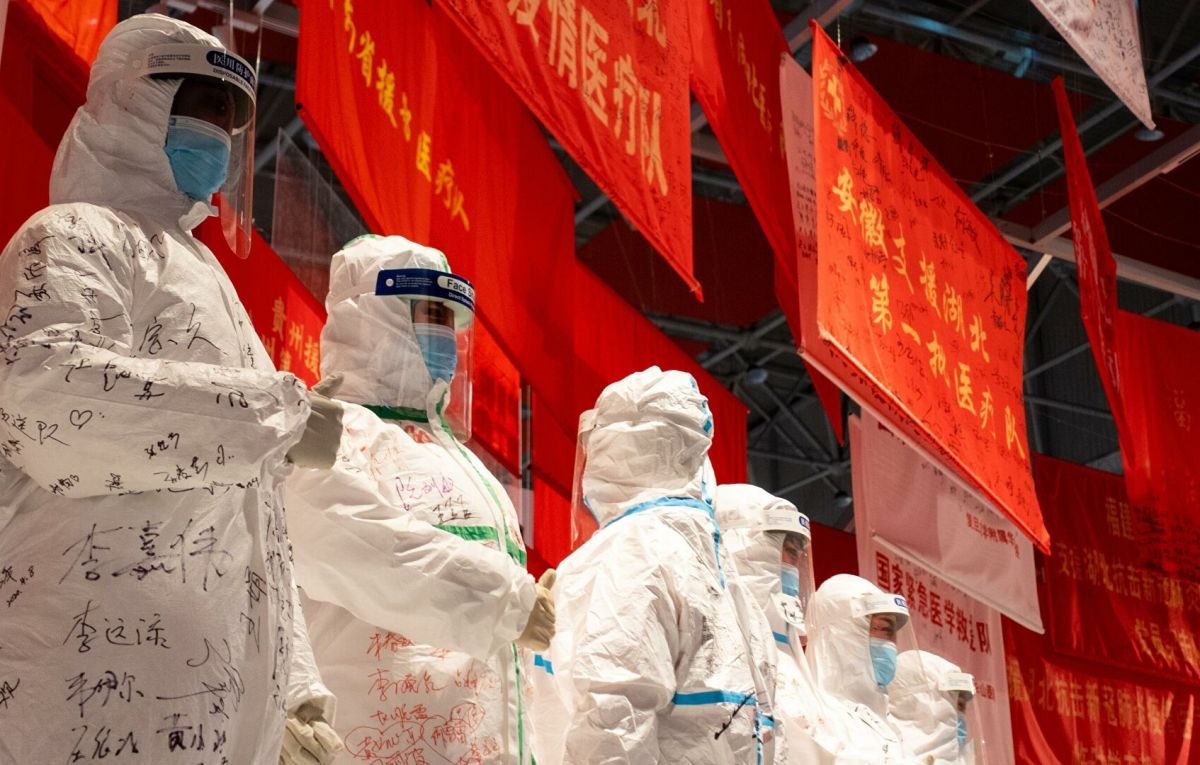
Delays could make the research “biologically impossible.”
A team of scientists appointed by the WHO to determine the origin of the coronavirus says the process has been blocked. Further delays could make the research “biologically impossible.”
We explain what scientists are debating, where “patient zero” is, and why the risks of new pandemics are rising.
Risks of New Pandemics
Marion Koopmans, a Dutch virologist and member of the WHO scientific team, told BBC that the risks of new pandemics are rising.
Marion Koopmans
virologistThis is due to how the world is changing: the population is growing, people live more densely, and they come into contact with animals more often. And we must understand where something went wrong and how we can avoid it in the future.
In January 2021, the team of scientists visited Wuhan, and in March it published a report with several recommendations:
- to examine the blood bank of China and other countries in order to identify antibodies to the coronavirus in blood donated before the first outbreak of the disease in December 2019
- to take samples from wild animals raised on farms, such as minks and raccoon dogs, which could be the “intermediate link” that allowed the virus to pass from animals to humans
Scientists fear that important biological information may have been lost, since animals raised on farms have short lifespans and blood banks also have expiration dates.
All versions of the investigation were equal, “but when accusations get mixed up with the right questions, the cases become quite complicated.”
In its report, the team of scientists also concluded that, although it is impossible to establish how the first people were infected, “all available data” indicate that the virus is of animal origin and was not created artificially.
Disputes
Professor Koopmans names the bat virus as the closest “relative” of SARS-CoV-2, the virus that causes COVID-19. However, there is a significant “gap in time” in the virus’s evolution, during which it passed from animals to humans.
Only studies of samples from the animals that scientists call the “intermediate link” can explain how this happened. The WHO scientific team ranked the different versions of the virus’s origin by probability.
Scientists consider the most likely version to be that the virus came from a farm where an animal raised for fur became the “intermediary” between bats and humans.
The possibility that the virus came from a Chinese laboratory is very unlikely. Koopmans noted: “Looking back, the phrase about ‘low probability’ was not the best way to express our thoughts, especially since the main dispute then developed around it.”
Accidental Leak
Discussions of the laboratory leak theory have focused on the Wuhan Institute of Virology, where the WHO team spent some time talking with researchers.
If there had been an accidental leak from the laboratory, the exact virus that then began to spread would have to be there. But scientists did not find it. Some believe the virus bank of the Wuhan institute, which was switched to autonomous mode in 2019, should be examined.
US President Joe Biden ordered intelligence agencies to conduct their own investigation. However, their report does not answer whether the virus emerged naturally or resulted from an accidental laboratory leak.
“Patient Zero”
According to Professor Koopmans, we may never find the “patient zero” from whom the coronavirus pandemic began. Without further scientific research, the world will not be able to answer how a virus circulating among bats led to a pandemic that claimed millions of lives and created economic chaos.
Marion Koopmans
virologistWe must make an effort and try, but there is no guarantee of success. But it is even more important that we understand how to pinpoint the crux of the matter. There is a whole group of viruses that circulate among bats, but which of them actually pose a risk? And how can we identify them? This is what we should have been finding out during our research.

Russian Attacks in Dnipropetrovsk Region: Two Killed, Seven Injured

Defense Forces Strike Four Russian Drone Control Points in Past Day, Including in Berdiansk

Britain Threatens Sanctions on Kremlin-Linked People; Poland Ready to Hand Ukraine Ammunition

Russia says it has completed "planned exercises" in the Black Sea

MVD: Fake Riots With Prop Blood Were Being Prepared Near Presidential Office

Law Enforcers Name Another Klitschko Deputy as Suspect

Berlin Holds Protest Against War in Ukraine; EU Prepares for Possible Russian Halt of Gas Supplies
North Korea Fires Ballistic Missile Over Record Distance in Five Years
Irish Fishermen Force Russia to Postpone Naval Drills

US sanctions in case of invasion of Ukraine could completely destroy Russia's economy, NYT reports
