
What Is Google's Stadia and Why the Gaming World Is About to Change

The era of physical consoles is nearing its end.
On August 19, ahead of the start of Gamescom in Germany, Google's new gaming project, Stadia, announced several dozen games that will appear on the platform. Among them is Cyberpunk 2077, which drew attention with its pre-release and features the image of Keanu Reeves.
What exactly is Stadia?
Imagine a console that is not next to your screen at home, but somewhere else entirely: you send control signals there, and it sends the picture back to your screen. All computing operations take place on a remote server.
In essence, you won't need to buy a PlayStation or another console; you'll connect to it via the internet, and the hardware itself will sooner or later become a relic, like VHS and DVD players.
The analogy with streaming video services, where the content and the player are in the cloud, fits well. Yes, it's like Amazon and Netflix, or MEGOGO and Oll.TV, but for games.
So what do you play on?
In the near future you will be able to play the most demanding games on phones and tablets, since phones will only send and receive the signal. You won't necessarily need to buy a gaming PC; any PC will do. And you'll be able to combine work and gaming on MacBooks: the inability to run games on Macs will lose all significance, since all the software operations of games will take place elsewhere.
The most you'll have to buy, if you want to play on a big screen, is a joystick and an access device. But the access device (Google, for example, has already announced that you'll be able to play via Chromecast) is needed until televisions with built-in support for Stadia and competing services appear. Well, by analogy with Smart TVs.
But at the first stage the list of devices is limited:
- Chromecast, which can be connected to any TV
- Mac
- desktop computers, laptops and netbooks running Windows 7 or later
- tablets with Google Chrome installed
- Google phones: Pixel 3 and others
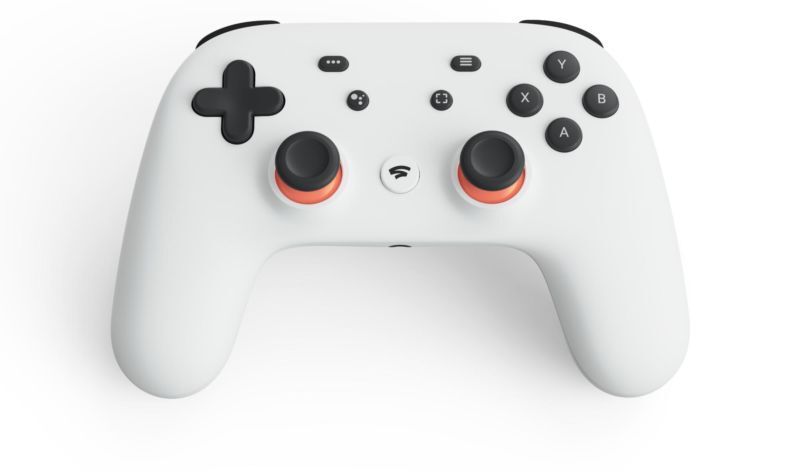
Competing services?
Yes, Stadia is not the first product in a market that has not yet taken shape. Sony beat everyone with its PlayStation Now service. Don't confuse it with PS Plus, which is familiar to gamers and allows you to download games to your console by subscription.
Apple has already presented its Apple Arcade service, but unlike Stadia, its specifications and the games it will offer are not yet fully clear.
Xbox is also developing a 'cloud console' service. Most likely, in about ten years this will be the only technology that allows today's console manufacturers to stay on the market.
What's so dramatic about Stadia if they're not innovators?
PlayStation Now has still not become popular, because at best it delivers 30 frames per second and lags, so gamers don't want to suffer and buy consoles instead. Also, the set of devices for PS Now is limited to laptops and the PlayStation itself. Why do you need such a service if you still have to buy a console for it?
Despite the almost five-year gap between the release of PS Now and Stadia, Sony failed to take advantage of it and gave competitors a chance to become market leaders right away.
Google promises that Stadia will deliver 60 frames per second even if your internet speed is 10 Mbit/s. At 35 Mbit/s the image will come in 4K quality, and the number of supported devices is much larger from the start (see above).
And what about prices? Will all games be on subscription?
No, the subscription will cost $10 a month, but it won't cover all games. The rest will have to be bought separately. This is not Netflix, where you pay once a month for access to a library of series and films. It's more like Ukraine's MEGOGO: it has a subscription too, but the most valuable films have to be paid for separately.
PS Now also works on a hybrid model, but its subscription currently starts at $20 — twice as expensive, though it's too early to compare the content of their libraries.
When will Stadia be available in Ukraine?
Not yet known. Of course, Google cannot build one data center with cloud consoles somewhere in America and broadcast the signal from it worldwide. Even for video services like Netflix or Amazon, the servers need to be relatively close to the user, otherwise the picture will arrive with significant lag (this is why the Disney+ streaming service is launching only in the largest markets and it is unknown when it will become truly global). For game streaming, the question of server proximity is several times more critical: you can't preload a few megabytes into a buffer here; an instant response is needed.
The closest Google data centers to Ukraine are in Finland and Belgium. It is not known whether data transfer speeds from there would be sufficient, but the main reason still lies in the poor market.
Although there are advantages too: very cheap and fast internet with high penetration. Who knows, perhaps this factor will help bring Stadia to Ukraine not right away, but in the not-too-distant future.
So when is the launch and what about the games?
Stadia will launch in limited access this November, and will start entering markets fully in 2020.
Below is the list of all games that will be available at launch:
- Bandai Namco – Dragon Ball Xenoverse 2
- Bethesda – DOOM Eternal, DOOM 2016, Rage 2, The Elder Scrolls Online, Wolfenstein: Youngblood
- Bungie – Destiny 2, Destiny 2: Shadowkeep Expansion
- CD PROJEKT RED – Cyberpunk 2077
- Chump Squad – KINE
- Coatsink – Get Packed
- Codemasters – GRID
- Dotemu – Windjammers 2
- Deep Silver – Metro Exodus
- Drool – Thumper
- Giants Software – Farming Simulator 19
- Larian Studios – Baldur’s Gate 3
- nWay Games – Power Rangers: Battle for the Grid
- Omega Force – Attack on Titan 2: Final Battle
- Pandemic Studios – Destroy All Humans!
- Robot Entertainment – Orcs Must Die 3
- Sega – Football Manager
- SNK – Samurai Shodown
- Square Enix – Final Fantasy XV – Tomb Raider Definitive Edition, Rise of the Tomb Raider, Shadow of the Tomb Raider, Marvel’s Avengers
- SUPERHOT – SUPERHOT
- 2K – NBA 2K, Borderlands 3
- Tequila Works – Gylt
- Warner Bros – Mortal Kombat 11
- THQ – Darksiders Genesis
- Ubisoft – Assassin’s Creed Odyssey, Just Dance , Tom Clancy’s Ghost Recon Breakpoint, Tom Clancy’s The Division 2, Trials Rising, The Crew 2, Watch Dogs: Legion
Yevhen Blazhko

Russian Attacks in Dnipropetrovsk Region: Two Killed, Seven Injured

Defense Forces Strike Four Russian Drone Control Points in Past Day, Including in Berdiansk

Britain Threatens Sanctions on Kremlin-Linked People; Poland Ready to Hand Ukraine Ammunition

Russia says it has completed "planned exercises" in the Black Sea

MVD: Fake Riots With Prop Blood Were Being Prepared Near Presidential Office

Law Enforcers Name Another Klitschko Deputy as Suspect

Berlin Holds Protest Against War in Ukraine; EU Prepares for Possible Russian Halt of Gas Supplies
North Korea Fires Ballistic Missile Over Record Distance in Five Years
Irish Fishermen Force Russia to Postpone Naval Drills

US sanctions in case of invasion of Ukraine could completely destroy Russia's economy, NYT reports
