
Why Are Most of the World's Oldest Companies Located in Japan?
Translation of a BBC text.
The country has around 33,000 businesses with at least 100 years of history. How have they managed to survive to the present day, and what does this mean for Japan's future?
Tsuen Tea was founded in 1160 and claims to be the oldest tea house in the world. It is run by 38-year-old Yusuke Tsuen. “We focused on tea rather than expanding the business,” — he says. “That is why we are still in business.”
Surprisingly, Tsuen Tea is not the only one. Back in 2008, a Bank of Korea report noted that of 5,586 companies older than 200 years in 41 countries, 56% were in Japan. According to research firm Teikoku Data Bank, Japan had more than 33,000 businesses older than 100 years in 2019. The oldest hotel in the world opened in 705 in Yamanashi, and the confectionery Ichimonjiya Wasuke has been selling sweets in Kyoto since 1000. Construction giant Takenaka in Osaka was founded in 1610, while some of the world's best-known Japanese brands, such as Suntory and Nintendo, trace their history back to the 1800s.
What can long-lived companies teach small startups?
Respect for tradition
Yoshinori Hara, dean and professor at the Graduate School of Management at Kyoto University, explains that companies at least 100 years old are called “shinise” — literally translated as “old shop”.
Hara says Japanese companies focus on stable development rather than maximizing profit — and this is the basis of longevity. “For Japan, this means a great deal: we need to pass [the company] on to our descendants,” he explains.
“I run a business started by my ancestors. If I hadn't taken the reins, it would have closed,” says Tsuen. “In kindergarten and elementary school, you are asked to dream about the future. I imagined running a business. It felt very plausible.”
Innan Sasaki, associate professor at the Warwick Business School, says there are other factors that are more specific to Japan.
“It is linked to a long-term orientation toward the future: a culture of respect for tradition and ancestors, combined with the fact that we live on an island nation with limited communication with other countries,” — she says, pointing to people's desire to use what they have for as long as possible.
Many of these oldest companies — medium or small family organizations in hospitality and food, such as Tsuen Tea. Some companies have even used the widely recognized Japanese practice of adopting a worker to ensure the business is passed on continuously. Even Suzuki Motor and Panasonic have done so.
Core skills and customer service
Nintendo is another company that is not as old as Tsuen Tea, but is much larger. It is known worldwide for releasing a game console in 1985.
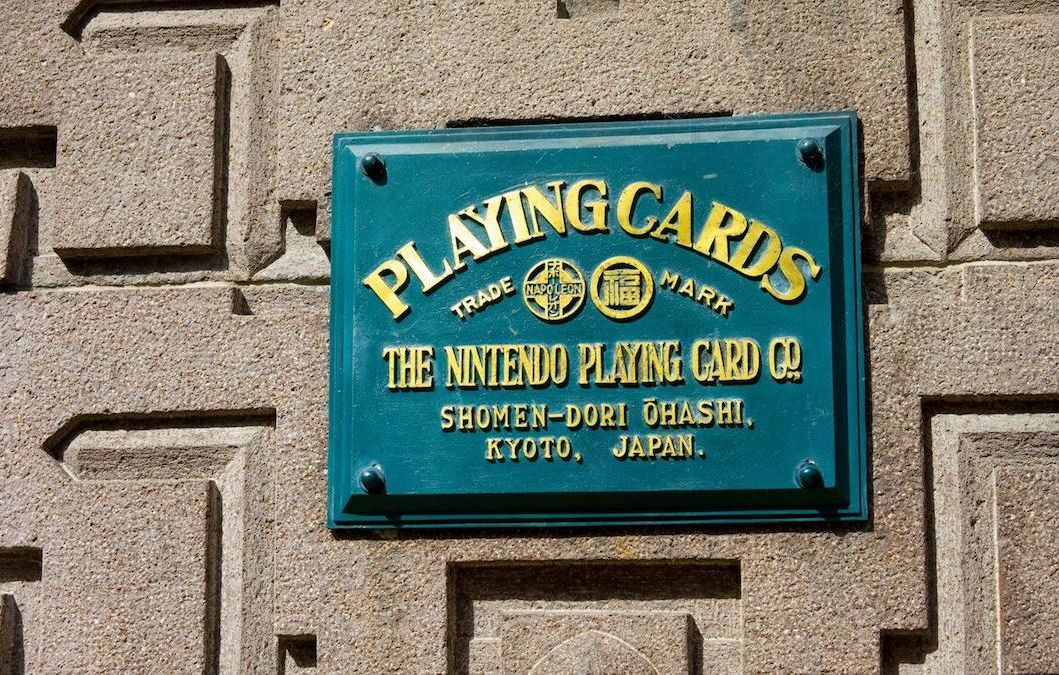
Most people do not know what preceded its huge success. Nintendo — a technology company — was founded in 1889 as a manufacturer of playing cards for the Japanese game hanafuda. The game involves a collection of cards with printed flowers, each of which earns points.
According to Hara of Kyoto University, Nintendo is an excellent example of how to stick to “core skills.” This helps the company survive even when the world around it changes.
Hara also notes that kimono companies are doing everything they can to stay in business, as fewer and fewer Japanese women wear traditional clothing. Hosoo, a kimono maker in Kyoto founded in 1688, has expanded production of carbon fiber for materials manufacturers. “The basic component remains three-dimensional weaving,” he says.
In Kyoto, many companies emphasize the quality of customer service that contributes to their prosperity. This applies to ryokan — traditional Japanese inns where guests are treated like family. According to Hara, Japanese companies value high-level service known as omotenashi and try to anticipate what customers need.
The Nishimura family ran the Kyoto ryokan Hiiragiya for six generations. The inn marked its 200th anniversary in 2018 and hosted guests such as Charlie Chaplin and Louis Vuitton. “Heartfelt communication — that is the best part of a ryokan,” she says. Looking through an 80-year-old guidebook that describes in detail how to run a ryokan, we can see that it mentions caring for a guest's handkerchief: how to wash it, fold it properly and return it. “But some guests may not like this method — [the book says], you must ask permission in advance,” says Nishimura.
“These companies prefer loyalty to the family business, stability, high quality and tradition rather than monitoring financial levels, — says Sasaki. “In Kyoto, these firms belong to the elite class.”
How does this affect innovation?
“At the beginning it was not easy, because startups are not as recognized as successful companies. It was hard for me to explain and tell my parents or friends what I was doing and where I worked,” says 27-year-old Mari Matsuzaki. She works at Queue, a Tokyo edtech startup, and used Slush — an international startup aimed at students — to launch the Tokyo version.
“I am perhaps the only one in my graduating class who decided to pursue a startup,” she says. “While in other countries founders are praised for turning their failures into valuable experience, in Japan it is a battle that many entrepreneurs have to overcome.”
Michael Kusumano agrees. He is a professor at the Massachusetts Institute of Technology, who headed entrepreneurship and innovation initiatives at Tokyo University of Science from 2016 to 2017, and also lived and worked in Japan for eight years.
“Closing a company or selling it is also considered a kind of failure and disgrace in Japan; all of this has been passed down from our ancestors. Such cultural problems encourage families to keep their firms running”, he says. “Japanese society and the economy are not as flexible as in the US, so Japan does not easily create new large companies. The point is to preserve what they have.”
Translation by Katerina Kilasonia, TK Media

Russian Attacks in Dnipropetrovsk Region: Two Killed, Seven Injured

Defense Forces Strike Four Russian Drone Control Points in Past Day, Including in Berdiansk

Britain Threatens Sanctions on Kremlin-Linked People; Poland Ready to Hand Ukraine Ammunition

Russia says it has completed "planned exercises" in the Black Sea

MVD: Fake Riots With Prop Blood Were Being Prepared Near Presidential Office

Law Enforcers Name Another Klitschko Deputy as Suspect

Berlin Holds Protest Against War in Ukraine; EU Prepares for Possible Russian Halt of Gas Supplies
North Korea Fires Ballistic Missile Over Record Distance in Five Years
Irish Fishermen Force Russia to Postpone Naval Drills

US sanctions in case of invasion of Ukraine could completely destroy Russia's economy, NYT reports
