
Yermak, Venediktova and IMF Games: Zelensky's Main Mistakes of 2020
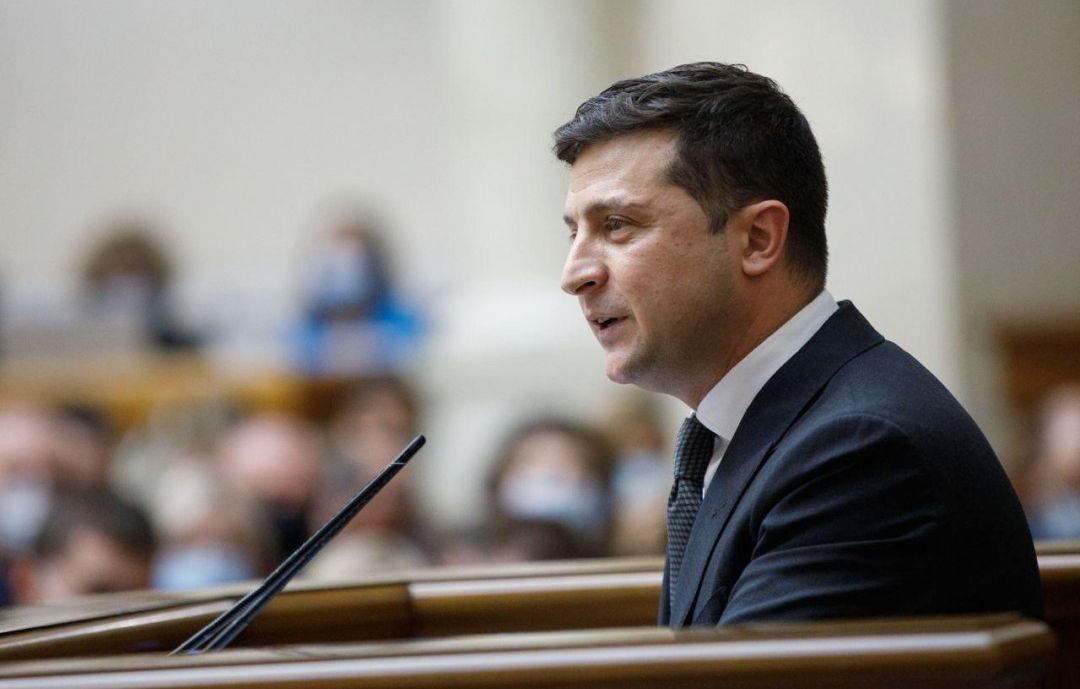
After a tough 2020, Volodymyr Zelensky remains Ukraine's most popular politician. At the same time, he is also the year's main disappointment.
What led to the drop in the president's rating? Evgeny Blazhko — on Volodymyr Zelensky's main mistakes in 2020.
Vacation in Oman and a Belated Return After the MAU Plane Crash
While still a comedian with Kvartal 95, Volodymyr Zelensky mocked Petro Poroshenko's unofficial vacation in the Maldives, but he himself very quickly repeated his predecessor's move: he quietly flew to Oman, where he was later spotted. The Office of the President's attempts to give the visit at least a semi-official air through meetings with second-tier Omani officials looked quite absurd.
The situation turned very bad for Zelensky a few days later: on the morning of January 8, a MAU plane was shot down near Tehran, but the president — contrary to his own statement — did not immediately return to Ukraine, staying in Oman for almost another day.
Andriy Yermak (at the time still just an aide) tried to justify the delay by citing closed airspace due to the Tehran crash, but a geographic map showed that the closed zone could have been flown around without any effort.
Andriy Yermak
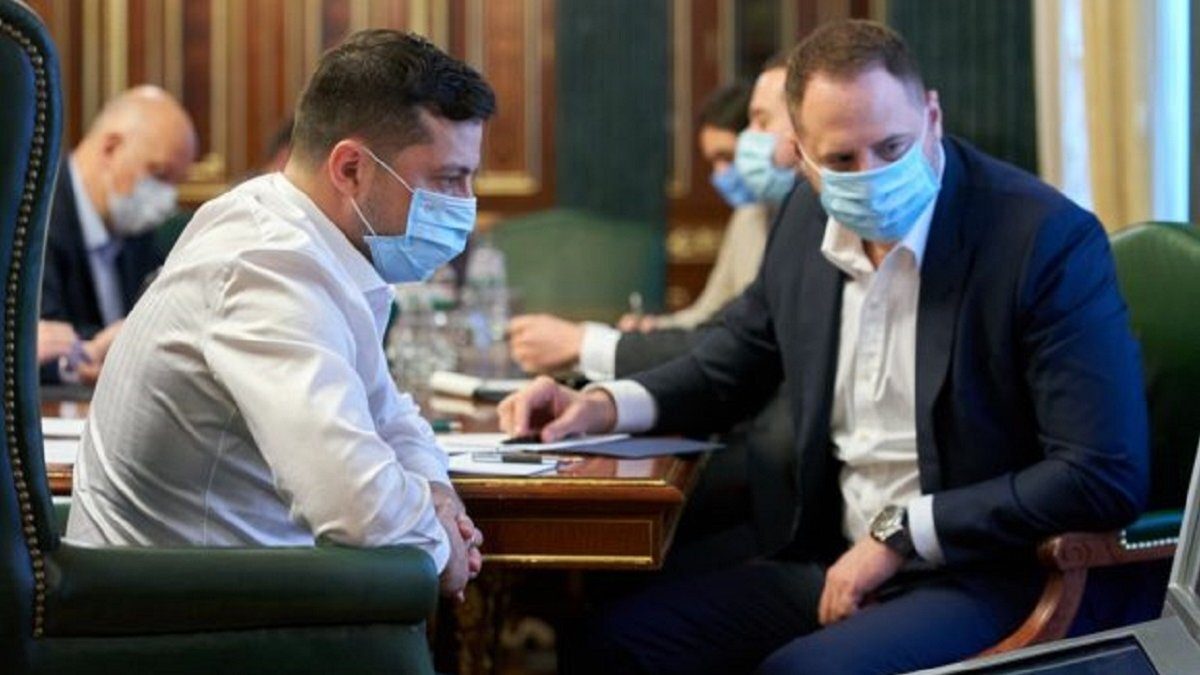
If Andriy Bohdan, as head of the OP, was mainly remembered for his past as Kolomoisky's lawyer, his jabs at journalists and whispering in Zelensky's ear, then his successor Yermak became a far more convenient figure for the president's opponents. And for lowering Zelensky's rating, he was almost ideal.
Whispering in the ear seemed like childish babble compared to what Yermak took upon himself: he began appearing with Zelensky everywhere, and sometimes without him, as if he at least held the post of vice president of Ukraine, and at most was the president. Although, when Zelensky was elected, practically no one knew of Yermak's existence. Rumors even circulated in journalistic circles that Yermak did not mind the president being criticized, as long as he himself was not criticized.
If this is true, implementing this idea became extremely difficult due to the constant scandals Yermak got himself into. The loudest — when his brother in a video offered various people to run for state posts for money — but also the likely leak of the special operation against the Wagner fighters perfectly fit the narrative “Yermak works for Russia,” which he has long been accused of.
Turning Into a Monument
One of Zelensky's advantages during the election campaign was his relaxed demeanor. In many people's eyes, this set him apart favorably from Petro Poroshenko, whose speeches seemed far more contrived than those of the former actor.
And if the first months of the presidency more or less matched the image for which 75% had voted, then since the start of the year — whether by chance coinciding with Bohdan's replacement by Yermak, or not quite — everything changed sharply. The president's words — both in the media and in video addresses — became purely bureaucratic, the constant phrase “I'm taking it under personal control” turned into a meme, and in ribbon-cutting he differed little from Poroshenko.
The most striking case, perhaps, was Zelensky's appearance at the first official match of the revived (in essence, just renamed) football club Kryvbas. For the president from Kryvyi Rih to touch the ball, the game was delayed by almost an hour.
The Disgrace with Health Ministers
The Ministry of Health became the main agency during the pandemic, but in Ukraine it turned into a real disgrace because of Zelensky. When the pandemic had not yet started in Ukraine, the president for some reason asked then-minister Zoryana Skaletska to live in a boarding house in Novi Sanzhary together with evacuees from China.
Skaletska, who apparently had nothing better to do, proved hopeless as a showman; her stay at the boarding house interested no one. Then Zelensky fired her along with the rest of Honcharuk's government.
To her place he appointed 64-year-old Ilya Yemets, who had earlier been minister under Yanukovych for several weeks, and ultimately worked for the same several weeks in 2020 as well. He was remembered only for demands to introduce a total lockdown, blocking key procurements, and the phrase “all the pensioners will die.”
But Zelensky's third attempt — Maksym Stepanov — also turned out absurd. Stepanov repeatedly got caught in corruption scandals and completely failed to prepare for the second wave of coronavirus. What keeps him in office to this day, it seems, is only that another reshuffle at the Ministry of Health in such a period would merely prove that Zelensky is extremely weak on personnel matters.
Venediktova and Tatarov
In the scandalous conversation with US President Donald Trump, Zelensky called the future prosecutor general Ruslan Ryaboshapka “a 100% my man.” But for some reason he became much more attached to others.
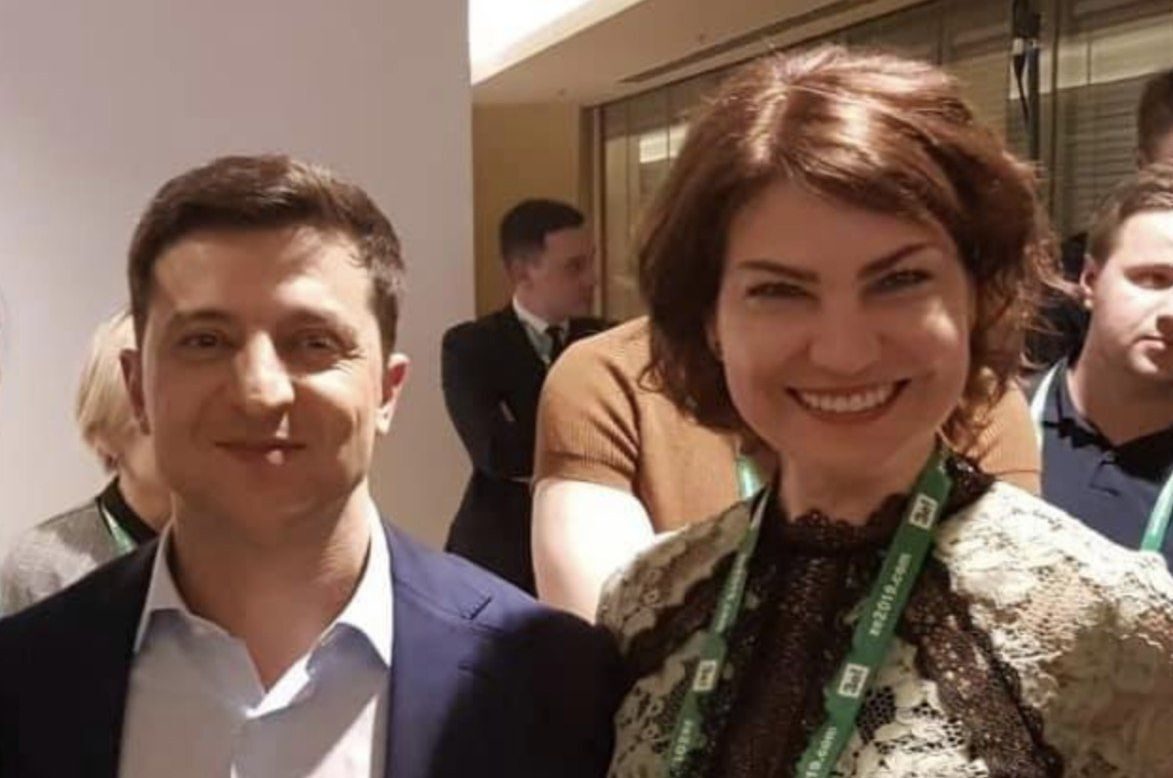
To give the go-ahead to dismiss Ryaboshapka, Zelensky did not need any dubious story — it was enough to simply cite inefficiency. Iryna Venediktova, for her part, retains her post even after a series of scandals, and Zelensky only ridiculously shields her.
The most telling moment was the case of Oleh Tatarov. He already had a dubious reputation from working on Viktor Yanukovych's team, and then — after receiving his post in the Office of the President — former president of the scandalous developer Ukrbud, Maksym Mykytas, also testified against him.
As a result, Venediktova, probably violating the law, took the case away from NABU and handed it to the SBU, which is suspected of loyalty to the OP because of the figure of Ivan Bakanov. And she herself cowardly hid behind her deputy Oleksiy Symonenko, saying it was not her decision but his.
Right, of course.
Rolling Back Reforms
It is hard to say how good customs chief Maksym Nefedov was, but he had a plan of action and his own vision. What came after him is a direct rejection of the reform of a structure that loses billions of dollars a year for the budget in favor of smugglers.
Nefedov was not the end of it. Tax chief Serhiy Verlanov was removed along with him. Those who came in their place looked more like figures beneficial to corrupt officials. Without reputation, without a program, and without a clear understanding of the necessary actions.
The corporate reform at a number of state enterprises was broken by the authorities with a populist cap on salaries during the coronavirus, as a result of which many specialists quit.
Under Education Minister Shkarlet there is more talk about whether the ZNO will survive, rather than whether the reform of outdated education will continue.
Zelensky, Stepanov and others smeared Ulyana Suprun's reforms from all sides, but failed to offer the slightest alternative aimed at progress rather than rollback.
Constant Attempts to Deceive the IMF
“PrivatBank” has still not returned to Ihor Kolomoisky's hands, and the Surkis brothers have not yet received multimillion-dollar compensation from taxpayers' money after nationalization. Beyond that, the good in the financial sector ends there.
At a time when cheap loans are essential for the Ukrainian economy, Ukraine's leadership seemed to do everything to not receive them. In words Zelensky supports NABU, but in reality his circle does not stop trying to destroy the agency's legitimacy and oust its head Artem Sytnyk. Is it pressure from the West? Well, then you can take cases away from NABU with Venediktova's hands.
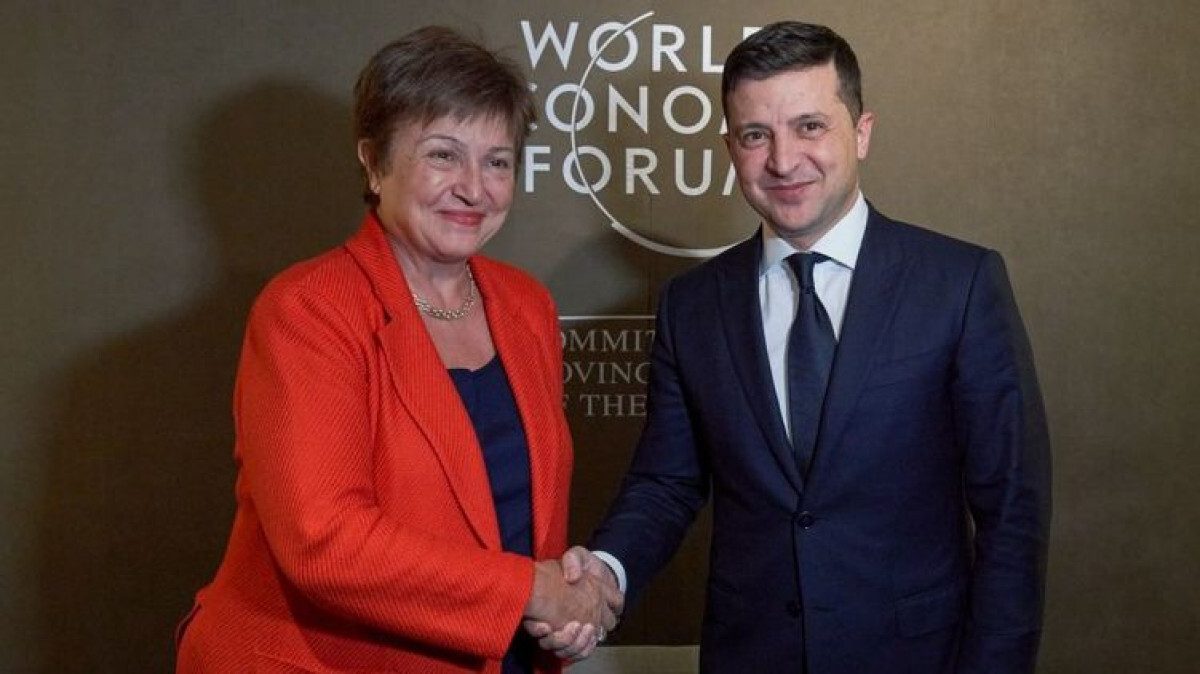
In words Zelensky supports the independence of the National Bank of Ukraine, but in reality he forced Yakiv Smoliy, who was authoritative in the eyes of the IMF, to resign, although under him the hryvnia remained stable, the interest rate kept falling, and loans were actively given at low interest.
Instead of the tranche promised at the end of the year, all that Ukrainian authorities managed to achieve — was an IMF mission visit.
Vitold Fokin and Personnel Chaos
Forgotten by everyone except his granddaughter Masha, Ukraine's first prime minister Vitold Fokin was for some reason disturbed in retirement with an offer to join the Trilateral Contact Group. Even the appointment of Ukraine's first president Leonid Kravchuk as head of the TCG began to look at least somewhat justified against this backdrop.
Fokin — as expected — brought Zelensky nothing but disgrace, and after a couple of scandalous interviews in which he openly supported the Russian narrative about the “rebels,” he was sent back into retirement.
But it's not only about him. If Fokin or, say, Svyatoslav Piskun (he was for some reason appointed adviser to Venediktova) were soon got rid of, then others who were sharply criticized even before their appointment (such as Tatarov) the authorities hold on to with both hands and take cases away from NABU.
Judicial Lawlessness
Of course, Zelensky is not to blame for Ukraine's judicial system being rotten through and through, but all he did for its reform in a year and a half was threaten to dissolve the Constitutional Court. After the intention was criticized from all sides (some did not like the idea of dissolving a court that suited them, others do not consider the idea legal and fear arbitrariness), there appeared a suspicion that the court and corruption in it had only grown stronger.
At the same time, NABU received no support in its hunt for the notorious judge Vovk, and Zelensky did nothing to dissolve the absurd Kyiv District Administrative Court (OASK). Blaming predecessors is only possible by looking in the mirror.
Promises Constantly Diverge from Actions
Promises were initially Zelensky's weakest point, because many of them simply could not be fulfilled. Well, that's not new either.
On the other hand, there was one very telling moment. On local election day, the authorities conducted a poll with five questions. Its results were not even announced. Only from independent public opinion polls did it become clear that there was sufficient support in society for four of them, while opinions diverged on one more.
But what does the authority do next? The only question where no unambiguous support was received — the question of a “free economic zone in Donbas” — was put on the agenda, and about the others — not a word.
The life imprisonment for large-scale corruption, which was strongly supported by society, was implemented by Zelensky in exactly the opposite way. After the Constitutional Court struck down the punishment for false declarations, it had to be restored. But Zelensky signed a much milder law than before — prison is now not provided for at all.
Evgeny Blazhko, TK Media

Russian Attacks in Dnipropetrovsk Region: Two Killed, Seven Injured

Defense Forces Strike Four Russian Drone Control Points in Past Day, Including in Berdiansk

Britain Threatens Sanctions on Kremlin-Linked People; Poland Ready to Hand Ukraine Ammunition

Russia says it has completed "planned exercises" in the Black Sea

MVD: Fake Riots With Prop Blood Were Being Prepared Near Presidential Office

Law Enforcers Name Another Klitschko Deputy as Suspect

Berlin Holds Protest Against War in Ukraine; EU Prepares for Possible Russian Halt of Gas Supplies
North Korea Fires Ballistic Missile Over Record Distance in Five Years
Irish Fishermen Force Russia to Postpone Naval Drills

US sanctions in case of invasion of Ukraine could completely destroy Russia's economy, NYT reports
