
Yevgenia Kuleba: Our goal is to tell Kyiv residents about their rights and involve them in decision-making
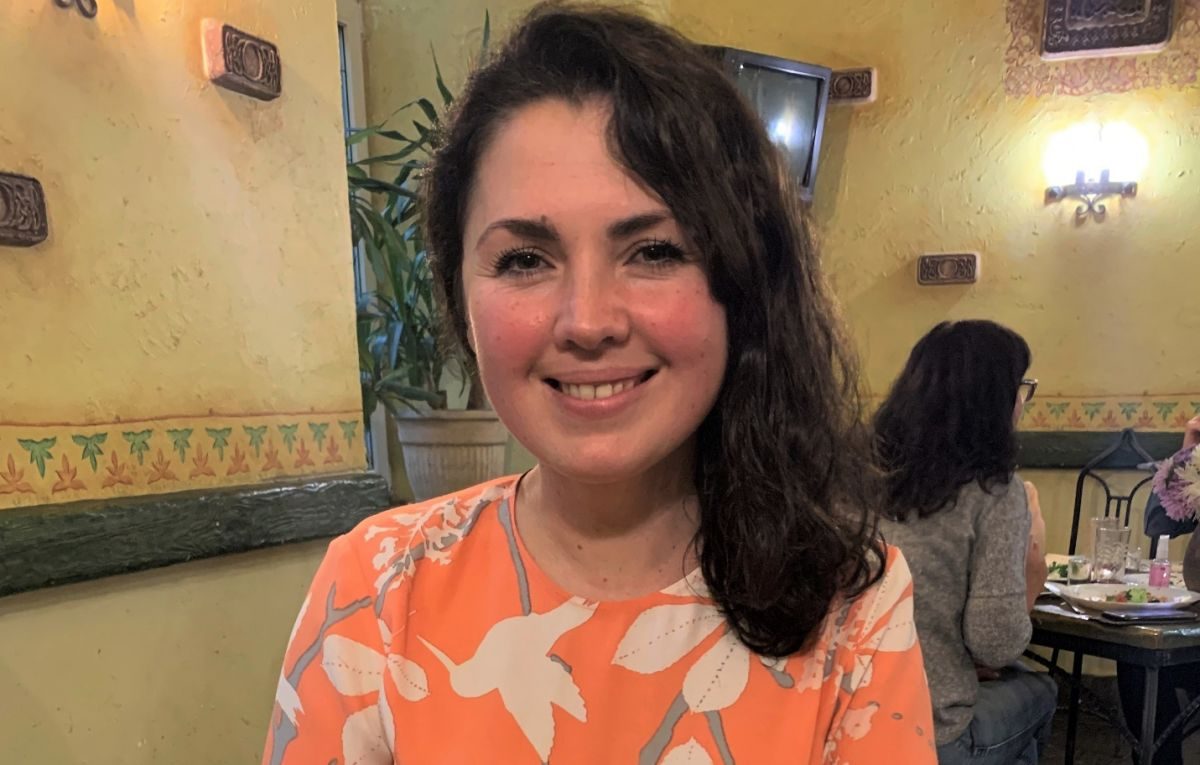
Number one on the Servant of the People list for the Kyiv City Council spoke about why she decided to go into politics and what she plans to teach Kyivites in the next 5 years.
Since 2014, Yevgenia Kuleba, a lawyer and head of the NGO City Garden and wife of Foreign Minister Dmytro Kuleba, has been working on the development of Kyiv and cities in eastern Ukraine, and in September 2020 she unexpectedly took the lead of the Servant of the People team in the elections to the Kyiv City Council.
In an interview for TK Media, Yevgenia Kuleba talked about her views on the law on the capital, how she influenced the formation of the party list and ended up on it at the last moment, how she earns her living and how she plans to change the lives of Kyivites as a politician.
– Like most people, I first heard about you after the Servant of the People list was announced. You have the City Garden organization, and you worked at the Mystetskyi Arsenal, but when you were announced as a candidate in the Kyiv City Council elections, the vast majority of media outlets labeled you as "the wife of Minister Dmytro Kuleba". Does this not bother you?
– This was entirely expected, and it doesn't bother me. I understand the logic of such headlines, but I know that I have been working quite successfully in the public sector, and the people who work with me know about the organization's achievements, so I took it calmly.
– How many years has your organization City Garden existed, and how did it come about?
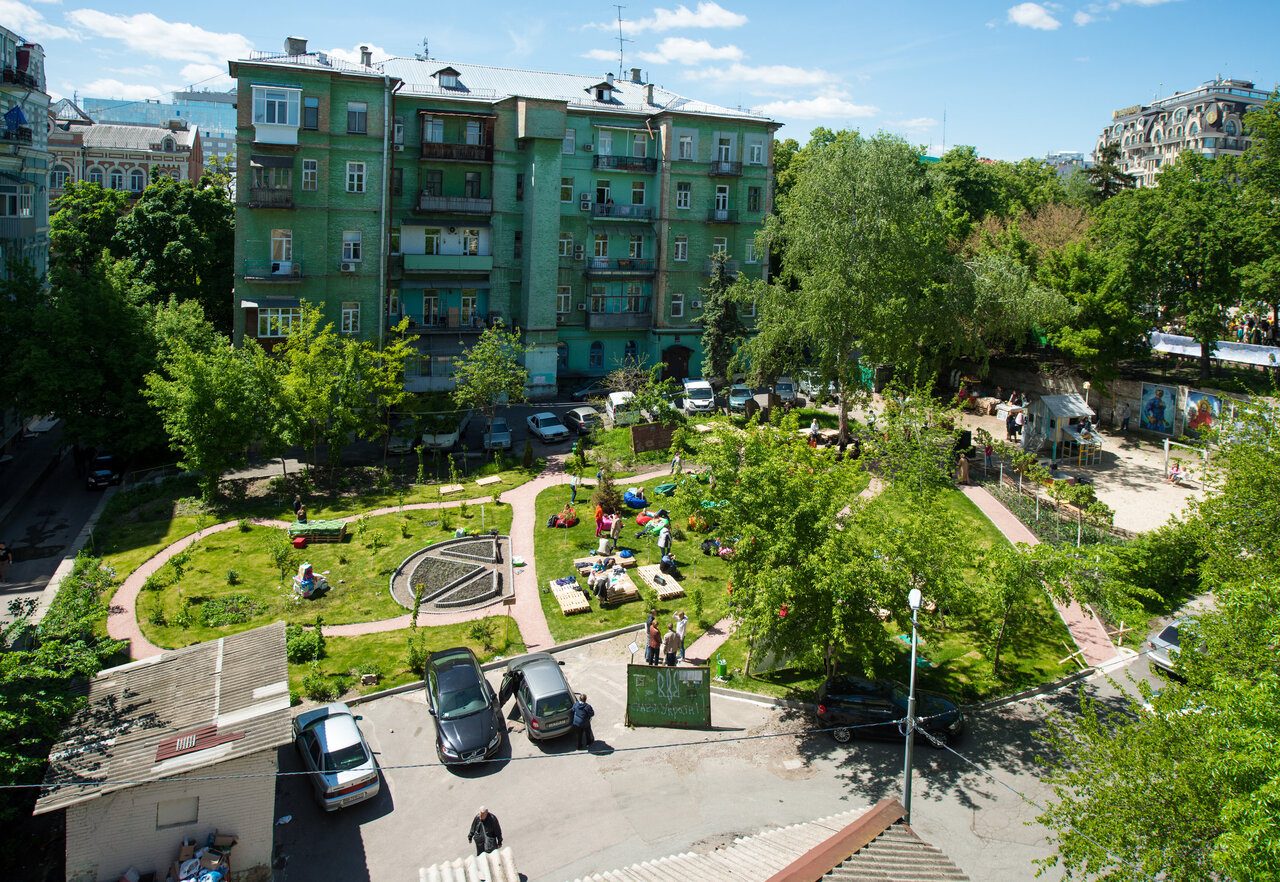
– The City Garden organization grew out of a volunteer project called the Heavenly Hundred Square. There was a garbage dump in the center of Kyiv, closed off by a construction fence. During the Revolution of Dignity, this fence, like many fences around Maidan, began to be dismantled for barricades. All of this happened on February 18-19, 2014, one of the most tragic days of the revolution.
And at that moment first local residents, and then active Kyivites, understood the scale of this dump and decided to return this land to the city and create a garden on this site – a modern, dynamic public space. And to dedicate all this work – both legal and physical – to the Heavenly Hundred. And that was the beginning of City Garden.
– Who owned this land?
– When we raised the documents, it became clear that the land had been handed over for development in violation of the legislation. All of this happened during Chernovetskyi's time. It was transferred to Chernovetskyi's former son-in-law, Mr. Suprunenko (Oleksandr Suprunenko – ed.).
After a deep legal analysis, the specific violations committed during the transfer of this land became clear.
There is an interesting story: they not only transferred the land into private ownership for development, they leased out a square – part of Mykhailivska Square. The developer wanted to build a hotel or office center on the site where the Heavenly Hundred Square is now, with an exit onto Mykhailivska Square.
– And you managed to reverse this?
– We were in court for a very long time. We had court cases in 2014, and the last court decision was made in 2018. Now there is a decision of the Supreme Court of Ukraine, we have gone through all instances, and now the land has been returned to state ownership.
Unfortunately, over the following two years we were never able to convince representatives of the current city authorities that the space should be granted the status of a square.
Why we would like to get it: the square should have lighting, it should be cleaned, we need to use water – and, of course, someone has to pay for all this.
Therefore, official square status is very important for us. Not only the City Garden team is working on this issue. The Heavenly Hundred Square has always been a volunteer project of City Garden, but colleagues from other organizations are joining its work.
– You have every chance to fix this status in the Kyiv City Council.
– I want to raise attention to the importance of the "lungs of the city" to a new level.
The City Garden organization was created because we needed to become a party to a court case. To do this, you need to become a legal entity. Since 2014 we had been suing and losing in every court, and then the Supreme Court issued a ruling that the decisions of the previous courts had been made with errors. And we started over, from the first instance. And already during the second hearing, City Garden became a party to the court case.
– When you say "we", how many people does City Garden consist of?
– For everyone who works at City Garden on the Heavenly Hundred Square project, it is always volunteer work, I don't force anyone to help with this project. We find funding for the other projects. Mainly up to 10 active people take part. But we have huge public support. This is shown at least by the fact that a petition to return the land to city ownership gathered 10,000 votes in 3 days.
We work on a project basis: we submit an application, receive funding and assemble a team of people for specific tasks. On a permanent basis there is me as head, an architect, a project coordinator, a landscape designer, a graphic designer, a communications expert, three managers and an accountant. This is the core of the team.
But we invite different specialists for different tasks. For example, we are currently actively working with a brand strategist. That is, we are developing a brand strategy for specific public spaces in eastern Ukraine. Our main partners are USAID and European donors.
– How will the organization live on after the elections, when you will clearly be a deputy of the Kyiv City Council and busy with other activities?
– Over the last two years I have been participating in City Garden's work at a strategic level. We discuss project ideas, and I am brought in on tasks of a higher level than operational ones. For example, I conduct interviews, bring people into the team, and handle management and long-term issues. I can't say that I won't have enough time for my other work tasks.
City Garden is not going anywhere. I need to earn money somewhere, and this is my main source of income – work in the public sector.
I am also invited as a lecturer by other public organizations: recently in Kherson I gave a lecture on involving city residents in decision-making within the city. City Garden will keep working. It is a team of specialists in their field.
– The Heavenly Hundred Square is the calling card of your organization. What other projects are you proud of over 6 years of activity?
– In Sloviansk we worked with the local community on relaunching and reconstructing the central park "Shelkovychnyi". This is a project I am especially proud of.
We worked in Sloviansk for about 2 years. After we stopped working there, a core of responsible residents formed who continue to develop the city project. Concerts, dances and lectures are held there – the park lives its full life. Plus, all these organizations actively develop the city in all directions: they are engaged in culture and education.
We stirred people up and gave them knowledge. It has always been a process of mutual exchange: the residents of Sloviansk also taught us a lot.
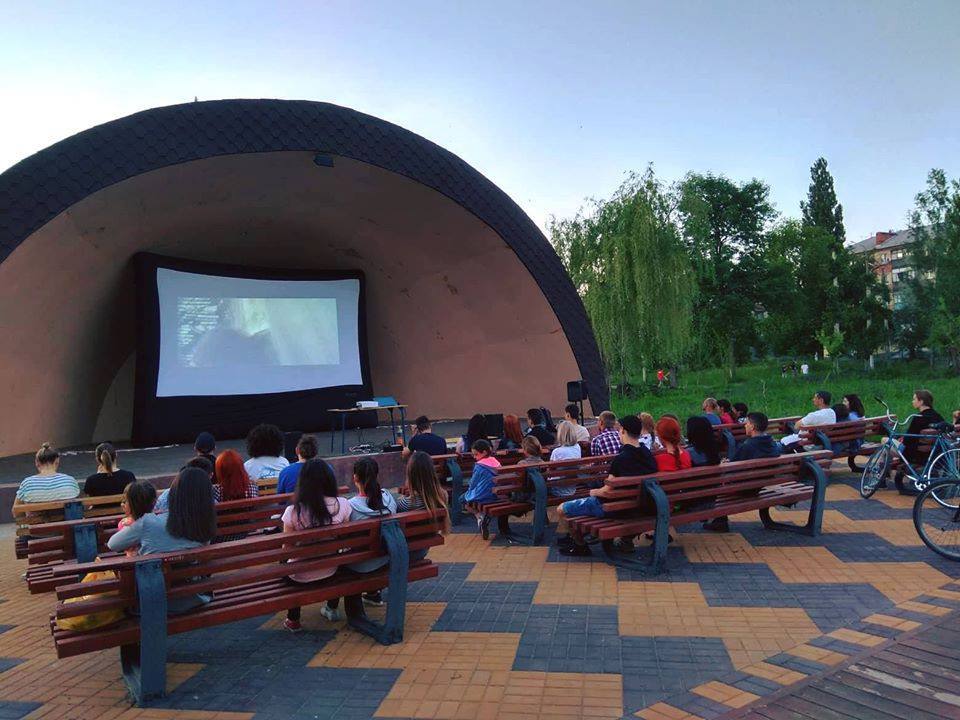
We generally specialize in work in Donetsk and Luhansk regions, so we better understand how to work with this audience. And our main strength is that we do not give a "fish" – we give a "fishing rod". We pay a lot of attention to training residents and show them, using various tools, how to be more active, conscious citizens.
– How does this audience differ from the rest of Ukrainian society?
– The specific feature is that people really want change. These are people who have felt the war on their own skin, who value what they have. Especially in Sloviansk. It went through occupation: there was no water there, and at some point people were collecting water from a fountain. People there value attention very much. For them, a Kyiv team that comes to work with them is a special value. These are people who absorb information and are very inspired. That is why we run educational projects there.
We also have a small public space called "Tochka" in Pokrovsk. It is a small public space, but in a microdistrict that has no developed infrastructure, so people have nowhere particular to go. There we created such a point of attraction for the microdistrict.
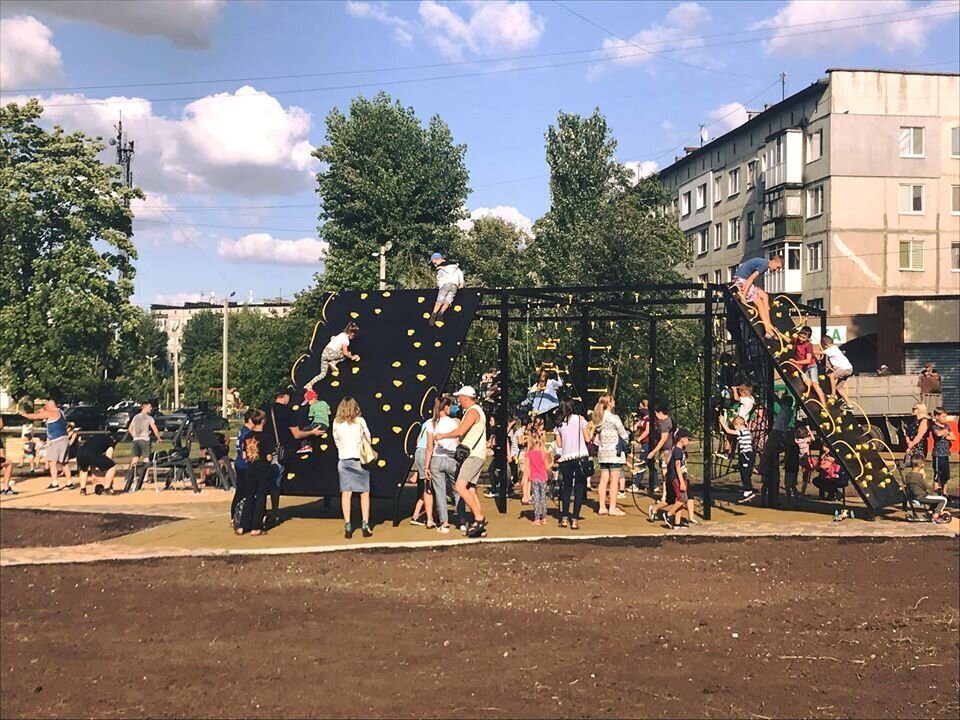
We also had an important project in the city of Dobropillia. We created the "21" square. The demand there was simply incredible.
When we conducted a survey, we found out that the residents of Dobropillia wanted an eco-square. That not a single tree be cut down, and that everything be built from environmentally friendly materials. We were, of course, inspired by the request; for us it was very interesting work.
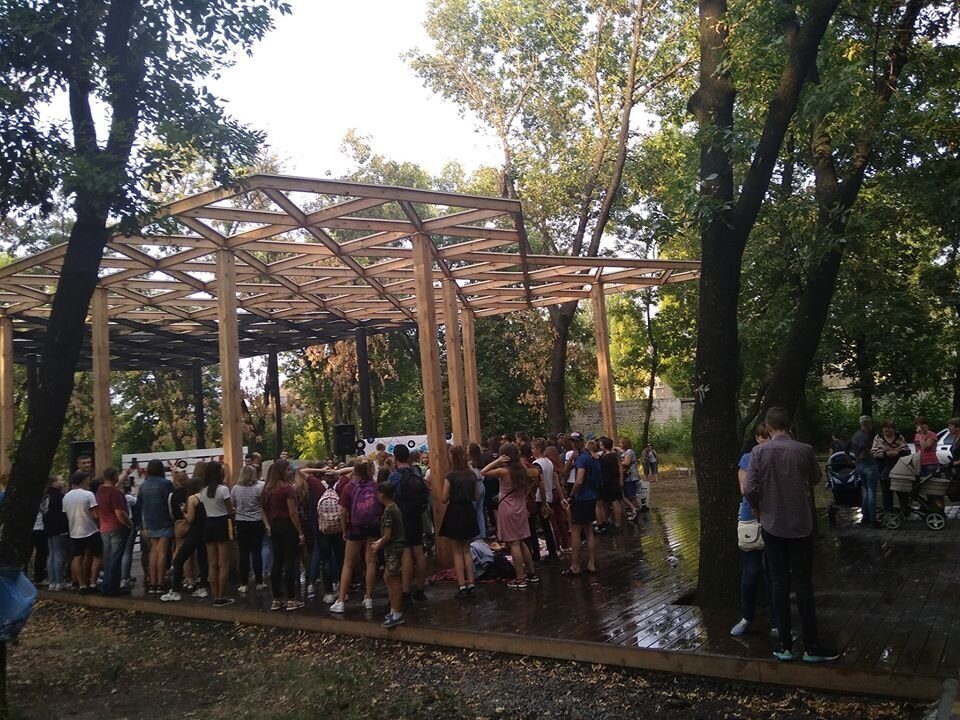
We created a very interesting wooden structure, like an agora (for the ancient Greeks, the agora was a marketplace, a place where public life was concentrated, surrounded by temples and administrative buildings – ed.). We created a space and activated the public to such an extent that they then held events there almost regularly: concerts, film screenings, folk art festivals.
The agora was burned by vandals after six months. A criminal case was opened, and there are no investigation results.
– These are projects in the regions. Are there any other practical examples in Kyiv? You are a Kyivite, born and living here.
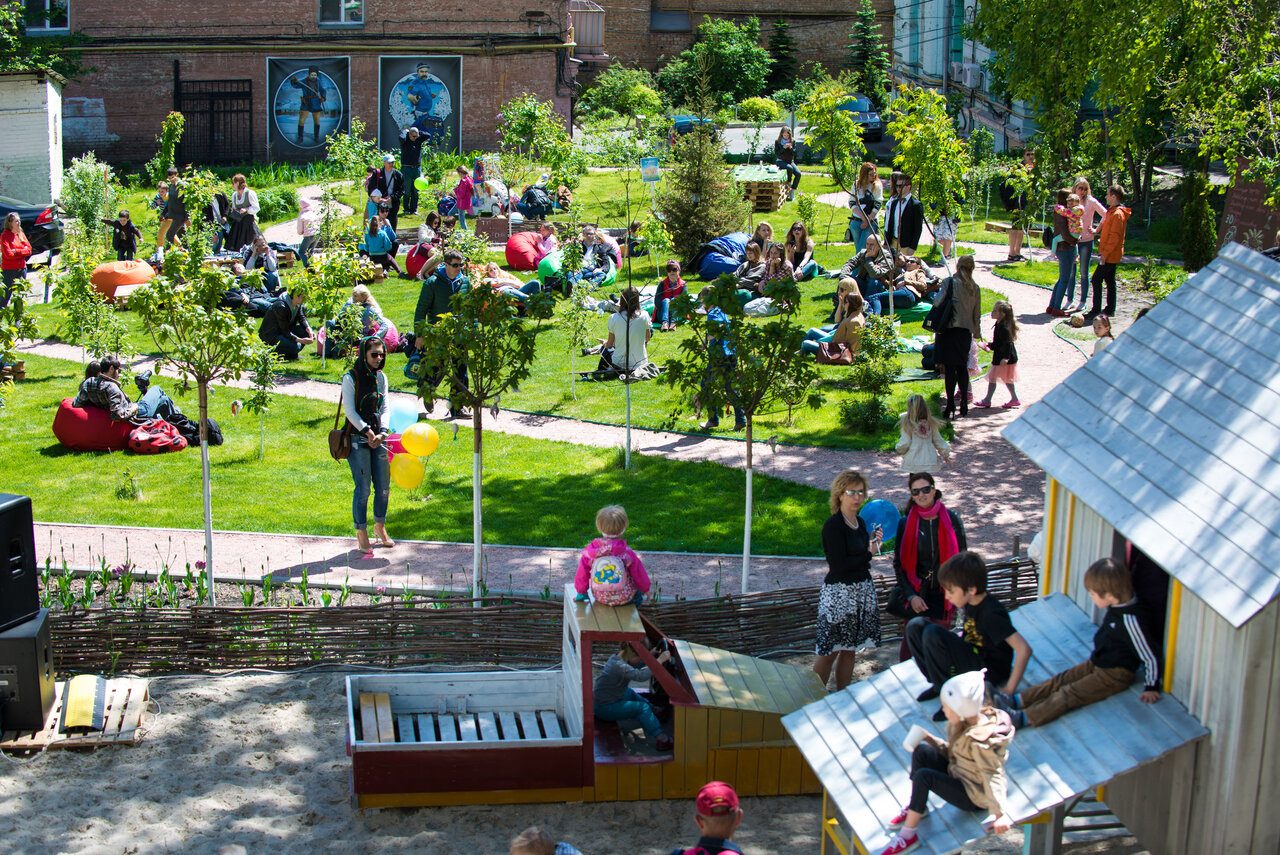
– I believe the Heavenly Hundred Square is an incredibly significant project not only for the capital but for all of Ukraine. The Samosad movement was also inspired by its example. And we focused on developing it as a public, dynamic space – there were endless concerts and film screenings. From 2014 to 2016 it was an active public space: lectures and conferences were held there.
I believe this is a very important contribution not only to the development of my Shevchenkivskyi district, but to the city as a whole.
I have lived in Kyiv for a year, before that I lived in Strasbourg for three years. During this time I worked more online, and we focused on projects in the east. Now I have returned – and the square has come back to life.
Also, among the important things I have been involved in, in 2016 I took part in the commission that selected the chief architect of Kyiv. I was a representative of the public.
– How did you come to the decision to go into politics? Did you receive an offer, or did you take the initiative?
– In the last year I have been thinking about the possibility of getting into politics at the local level. At the beginning of July I was approached by Verkhovna Rada deputies Anna Bondar and Dmytro Gurin. We had also worked in the same sector before. We talked, but these were non-specific conversations. They asked whether I would be interested in doing politics at the local level – I answered that yes, because that is the case, and no one persuaded me. Firstly, I would like to, and secondly, I have the strength. And that was it, those negotiations ended.
I understand that elections are a very active time for parties. And I think that at some point I simply fell out of focus, and this was not intentional. And shortly before the nomination of candidates, Oleksandr Kornienko and Iryna Vereshchuk contacted me – these are two people I spoke with before I spoke with the president.
– The list of candidates from SN for the Kyiv City Council: what was your involvement, and was it agreed with you?
– Of course, we agreed on the list. I made a very specific contribution. Everything took place in the form of discussion: proposals were made and then discussed.
I appeared as the first name on the SN list quite late – a few days before the nomination of candidates, and we were rather discussing the proposals for the list that already existed.
I saw at least two people on the list with whom I had worked in the public sector. And these people definitely had greater potential and more opportunities to implement their ideas in higher positions on the list. I proposed moving these people higher up the list – they are Vitaliy Selyk and Kseniya Semenova. They have a very good reputation and established projects.
– You say the list of candidates for the Kyiv City Council was formed through discussion. Who took part in this process? Who made the decisions?
– I discussed the list with Kornienko and Vereshchuk.
– Was Mykola Tyshchenko involved in this process?
– Mykola Tyshchenko is the head of the Kyiv city organization of the Servant of the People party. Of course, he took part in forming the list. But I discussed the list with Oleksandr Kornienko and Iryna Vereshchuk. I talked about the existing list and my attitude toward it. It was only a format of discussion.
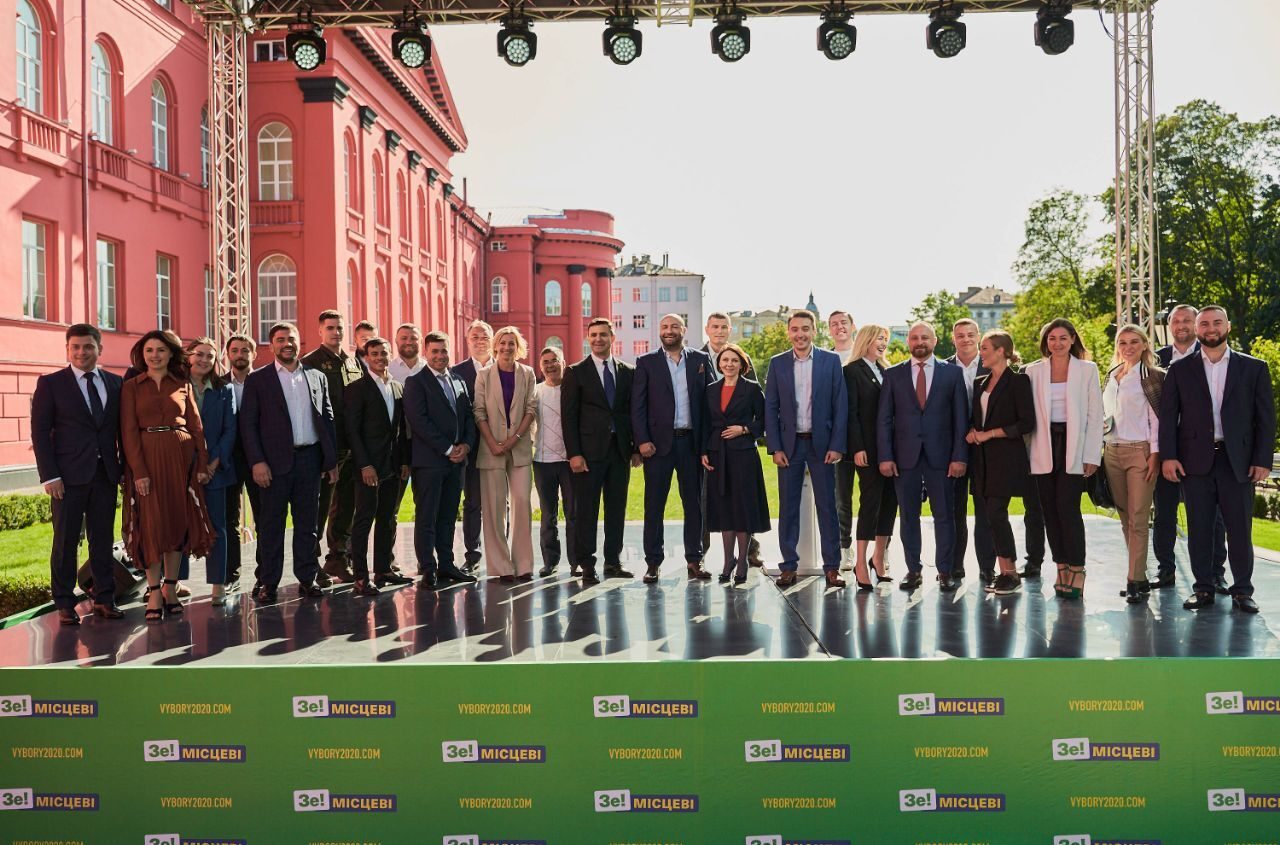
– You are the first name on the SN list. Do you know the people who are running behind you in the leading positions?
– Yes, of course, I know all of them. But I was not acquainted with all of them before the nomination. I can't say I knew all these people. I knew that Yelena Hovorova (adviser to Yermak, No. 3 on the list – ed.) is a well-known figure, but I did not know her personally. Of course, we got acquainted.
– What was the logic behind Tyshchenko ending up in 13th place on the initial SN list?
– I always refer such questions to the party's lawyers, but as far as I know, there was a misunderstanding. During the presentation there were people on the stage. And Mykola, as I know, was also on the stage. He is absent from the list that I know of.
– You publicly support the idea of separating the head of the Kyiv City Council and the Kyiv City State Administration. Kyiv majoritarian deputies are co-authors of the law on the capital. Kyiv residents perceive this proposal rather ambiguously. From the outside it looks as though they can elect anyone as mayor, but the ruling party will appoint whoever it sees fit as head of the KCSA.
– I advise you to read the law and not rely on what "they say". One should always read the primary source. In accordance with the law, it is proposed to restore self-government in the city of Kyiv. And in this context, to separate the positions of mayor and head of the KCSA. At the same time, the mayor gains more powers.
That is, Kyivites vote for a mayor who, together with the Kyiv City Council, will make strategic decisions concerning city matters: roads, municipal kindergartens, repairs, parks, squares. The mayor will handle this.
The head of the KCSA will be responsible for coordinating the work of state administration bodies concerning the city of Kyiv and state programs. His function is more related to coordinating the work of state authorities, for example, with the implementation of laws. And strategic and economic matters will be handled by the mayor.
I advise you to simply read the law – and you will see how logical it is. A mayor who is thinking about how to solve the traffic jam problem in Kyiv cannot at the same time be thinking about how to go to some commission at the Ministry of Culture, for example.
– From the outside it looks like this – "we cut half of the powers, but say that the powers are increasing. We appoint the head of the KCSA from another political force". They are interconnected and can slow each other down.
– Who do Kyivites vote for? For the mayor of the city. So let the mayor manage the city, rather than communicate with state authorities.
I am a person with very clear values, as it seems to me. And I will not openly advocate for something I do not believe in.
You could ask me other questions about the law on the capital. Do you know that in accordance with the law on the capital, district councils are being restored? Self-government is being returned to the city. In accordance with this law, the city becomes transparent, and there will be even more data in the public domain.
It is very important to read the law as a whole. Deputies are being asked to vote on the law not on the part that everyone is actively discussing in society, but on the law as a whole, and there are other parts as well.
– Deputies of the Kyiv City Council perform a public function and receive no salary. Given that over the next 4-5 years your enormous workload will leave you no opportunity to do other work, how will you live and on what? The question is about the many temptations that may arise while performing the functions of a Kyiv City Council deputy.
– I will live on what I have lived on before. This is income I receive from activities related to the City Garden public organization and lecturing.
– If it is not a trade secret, how much does your lecture cost?
– It varies. Recently I was paid 6,000 hryvnias, including travel far away; sometimes it is 1,500 hryvnias, and sometimes I lecture for free.
– Small amounts. How often do you give lectures?
– Not very often. The basis of my income is the activity related to City Garden.
– Do you have a team of experts who help develop specific solutions? How many people are in it?
– Yes, of course. We work with candidates for the Kyiv City Council and with experts. There is a pool of experts who help us develop solutions. I have not counted the number.
There is an expert on transport, on education, and there is a lawyer. There is an expert who has for quite some time been developing proposals for the development of sports and the promotion of a healthy lifestyle within Kyiv.
When it comes to environmental protection, I actively consult with the leading organization in this field in Kyiv. And I am very proud that the head of this organization would like to become my assistant on a volunteer basis.
– What are the five main goals you set for yourself in the Kyiv City Council?
– The first goal is involving Kyivites in decisions that concern Kyiv. This principle of "nothing about us without us" will be actively implemented in our work.
Second. For me it is very important to put on the agenda of the Kyiv City Council one of the most progressive and main trends in the development of all cities – adaptation to global climate change.
Here we are talking about how cities are now expanding their "lungs", that is, creating additional public spaces, how cities work on greening in order to contain rising temperatures and make cities healthier. This is a complex topic.
I am not saying that results will be achieved instantly, but we already have a strategy and we will take practical steps in this direction. A strategy for 5 years at a minimum.
Then we will work on waste management in the city of Kyiv. This is also a very global issue – and we also have ways to solve it. We will encourage Kyivites to sort waste while developing opportunities for its recycling. It is also a global, big topic, but there are very clear steps we will follow.
Then there is the topic that concerns Kyivites, and we have very good expertise in the team – traffic jams. It is connected to the previous topic I mentioned, the healthy city. We know how to work on this, how to fight traffic jams in Kyiv.
In general, the goal of our team is to put a person at the head of the city. Because everything that is created in the city should make it happier, more successful and provide opportunities for self-realization.
We will talk a lot about how to make the city comfortable for pedestrians, for cyclists, for people who need to use public transport to feel comfortable rather than getting into a minibus. I am generally a big opponent of minibuses.
We will work on the traffic issue, but it is very large and is linked to air quality. Because, according to research results in 2019, 89% of pollution in Kyiv's air comes precisely from motor vehicles.
And my favorite topic – it is again connected to the previous ones, but we will focus on it strongly – we will be engaged in educating Kyivites. We also have a strategy; Kseniya Semenova specializes in this, and we have a plan for how we will work on this topic.
First, we will explain as fully as possible what rights and responsibilities Kyivites have. Because Kyivites simply do not know many things about what opportunities they have.
We very much hope to launch a number of projects within which we will teach children, including in schools, how to be responsible citizens and, for example, how to sort garbage. Because there is global practice where children were taught first and then they taught their parents.
Because waste is a resource, a value, and we want to make the streets of Kyiv cleaner. So that there is clean air and clean water.
I do not want to promise something unattainable. I know how to achieve this. There are not many people who are ready, as I am, for example, to take their waste to a sorting station. We want to move in the direction of creating more opportunities for people to manage their waste.
This is the path – and we are ready to follow it.
Volodymyr Koval

Russian Attacks in Dnipropetrovsk Region: Two Killed, Seven Injured

Defense Forces Strike Four Russian Drone Control Points in Past Day, Including in Berdiansk

Britain Threatens Sanctions on Kremlin-Linked People; Poland Ready to Hand Ukraine Ammunition

Russia says it has completed "planned exercises" in the Black Sea

MVD: Fake Riots With Prop Blood Were Being Prepared Near Presidential Office

Law Enforcers Name Another Klitschko Deputy as Suspect

Berlin Holds Protest Against War in Ukraine; EU Prepares for Possible Russian Halt of Gas Supplies
North Korea Fires Ballistic Missile Over Record Distance in Five Years
Irish Fishermen Force Russia to Postpone Naval Drills

US sanctions in case of invasion of Ukraine could completely destroy Russia's economy, NYT reports
