
Lack of state symbols and indifference to historical past. What did critics of Zelensky's New Year address dislike?
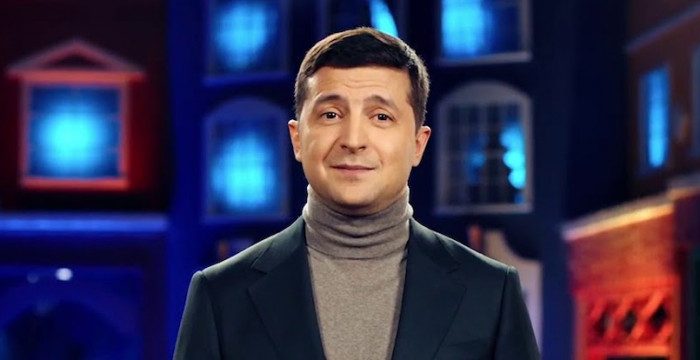
Six arguments from those who did not like the president's New Year address.
Volodymyr Zelensky's first New Year address as president drew both praise and criticism. Despite calls for unity and mutual respect among people of different political views and faiths, many disliked the absence of state symbols in the address and the disregard for historical matters: the names of streets and monuments.
Earlier, TK Media published six opinions from people who liked the president's address.
This material collects the arguments of those who disliked Volodymyr Zelensky's rhetoric.
1. "Sausage" dominated over national ideas
Ukrainian Armed Forces reserve officer Roman Kulik noted the creativity of the address but considers such a message "harmful" to the nation because it neglects historical questions in favor of "sausage rhetoric".
Roman Kulik
The picture is good and the presentation is creative, yes, but this is a primitive and now even harmful message to the nation. A complete leveling of all nation-centered things and institutions: from "it doesn't matter what language" to "it doesn't matter what church" and "whose names are on the streets and monuments." Totally "sausage" plebeian rhetoric for a society without values and self-respect, where the only criterion for measuring the effectiveness of government and the benefit of the state is purely the quality of road surfaces and the size of pensions. These things are also important, but they are not separate from the others and from the situation in the country. Because here the pendulum has swung to the radically opposite side.
2. What matters to many does not matter to Zelensky
Founder of the fund "Return Alive" Vitaliy Deyneha believes that "what's the difference" is a bad national idea.
Vitaliy Deyneha
founder of the fund "Return Alive"The difference, its size and what it consists of become visible after the very first shelling. (...) While the national idea is "what's the difference," there is no point in mentioning Shevchenko, because for him there was a difference. While we are ready to return prisoners, and not even "verified" ones, but whoever they give us in exchange for handing over everyone they asked for, there will be new prisoners. And we will have to gather an exchange fund for them, losing the best of us. (...) While we are ready to achieve peace by giving up dignity, there will be war, because depriving us of subjectivity is its goal. (...) Each time we pay a high price for the "education" of our government, since its "twos" history writes in our diary in blood. This government is no exception. But it will have to learn, and learn quickly. Therefore reality is too cold and leaves little time for reflection.
3. The greeting to Putin undermines calls for unity
Editor-in-chief of the outlet "Censor.net" Yuriy Butusov believes that the idea of national unity was undermined after the phone call with New Year greetings between the presidents of Ukraine and Russia.
Yuriy Butusov
editor-in-chief of "Censor.net""The idea of national unity is certainly the most important. But Putin's greeting, on the contrary, splits the country. The country already had peace with Putin, and the country nearly disappeared. (...) You cannot build a state with greetings, because by greeting an enemy you acknowledge your weakness and inability to compete. To build a state means to become capable, and Putin wants to destroy Ukraine's capability. As history teaches, states are not united by pleas and concessions. States are united by labor and wisdom, iron and blood. Only one thing will unite Ukraine: work for victory."
4. A passport cannot unite anyone, only the country can
Journalist Vitaliy Portnikov does not understand the desire to unite only around a Ukrainian passport.
Vitaliy Portnikov
journalistA passport is just a piece of cardboard printed at a printing plant. It does not unite anyone with anyone. You can live in any country that is willing to accept you with a Ukrainian passport, as well as with any other. (...) Only the country itself unites. Only Ukraine. Only the understanding that it is here, and only here, that you can be Ukrainian. Speak your own language. Be proud of your history. Live on your own land. Raise your children in love for their country, because without this love there will be no respect for other countries and peoples, only indifference and incomprehension.
5. Zelensky does not understand the difference between country and state
According to journalist Dmytro Lytvynov, Zelensky does not understand that he was elected to a state post.
6. Absence of state symbols in the speech
Former head of the media relations department of the Presidential Administration under Poroshenko (2014-2019) Volodymyr Gorkovenko noted the absence of Ukrainian state symbols in the address: the flag and the coat of arms.
Volodymyr Gorkovenko
head of the department of the Presidential Administration under President PoroshenkoYesterday the whole country saw the greetings of Volodymyr Zelensky. Just the actor Volodymyr Zelensky. As last year. He voiced a well-written text. But this was not the speech of the President of Ukraine. (...) During the speech there were no symbols of statehood. Those that set the country apart from savages. There was neither the State Flag nor the State Coat of Arms. Those that identify the country from other states. Those for which we always fought. Those for which our soldiers in the East have given and still give their lives.
You can read the arguments of those who liked the president's address here.

Russian Attacks in Dnipropetrovsk Region: Two Killed, Seven Injured

Defense Forces Strike Four Russian Drone Control Points in Past Day, Including in Berdiansk

Britain Threatens Sanctions on Kremlin-Linked People; Poland Ready to Hand Ukraine Ammunition

Russia says it has completed "planned exercises" in the Black Sea

MVD: Fake Riots With Prop Blood Were Being Prepared Near Presidential Office

Law Enforcers Name Another Klitschko Deputy as Suspect

Berlin Holds Protest Against War in Ukraine; EU Prepares for Possible Russian Halt of Gas Supplies
North Korea Fires Ballistic Missile Over Record Distance in Five Years
Irish Fishermen Force Russia to Postpone Naval Drills

US sanctions in case of invasion of Ukraine could completely destroy Russia's economy, NYT reports
