
Zhadan & Zabuzhko: why the West fell in love with suchukrlit

How Ukrainian writers are translated, studied and evaluated around the world
In January, Ukrainian literature gave us a new reason for pride: Oksana Zabuzhko's short story collection «Here Could Be Your Ad» made it onto The New York Times' list of most anticipated foreign books. Here is a look at other compatriots who have won over Western critics.
In April 2013, the first novel by Serhiy Zhadan «Depeche Mode» was published in English. Both sides are hardly comfortable recalling that publication now: the book was released by the Glagoslav publishing house, which shortly afterward brought out English translations of books by former Russian Culture Minister Vladimir Medinsky, «Peacemaker» database star Yevgeny Grishkovets and pro-Kremlin TV host Vladimir Solovyov. But readers were pleased: Amazon has plenty of glowing reviews comparing the story of Kharkiv subculture members to Irvine Welsh's «Trainspotting». Critics, for their part, did not hesitate to declare Zhadan the new heir to Kurt Vonnegut and William Burroughs.
«Voroshilovgrad» was published in the US under the wing of the independent publisher Deep Vellum, which recently also translated the collection «Life» by Oleg Sentsov. Since then Zhadan has moved into the roster of Yale University Press and into the category of translated mainstream: the collection «Mesopotamia» is currently sold on the website of the American retail chain Walmart for $12 with the eye-catching note «only 2 left!» Aspen Review compares the novel «Boarding School», in which a teacher during the war in Donbas saves his nephew, with Cormac McCarthy's famous post-apocalyptic «The Road». And an American columnist responds to «Voroshilovgrad»: «Zhadan's prose is as flammable as his country». (Meaning not only revolutions: when a girl was vacationing in the Carpathians, her cabin burned down, along with a copy of «Voroshilovgrad».)
The website American Documentary, which popularizes documentary film, recommends reading «Voroshilovgrad» and «Mesopotamia» to better understand the Donbas film «Distant Barking Dogs», which last year made the shortlist for the Oscar. And the influential publishing industry magazine Publishers Weekly writes about the novel that would later be adapted into the film «Wild Field» as follows: «Although Zhadan's vivid imagination and rich lyricism sit uneasily with his stereotyped female characters, readers will be moved by his devotion to a land of enchanting beauty, high skies and black soil». Zhadan's poetry often reminds critics of Charles Bukowski, but «Voroshilovgrad» is more often compared to so-called «border prose», for example Salman Rushdie's «Midnight's Children», where India (like Zhadan's Donbas) tries to define its identity.
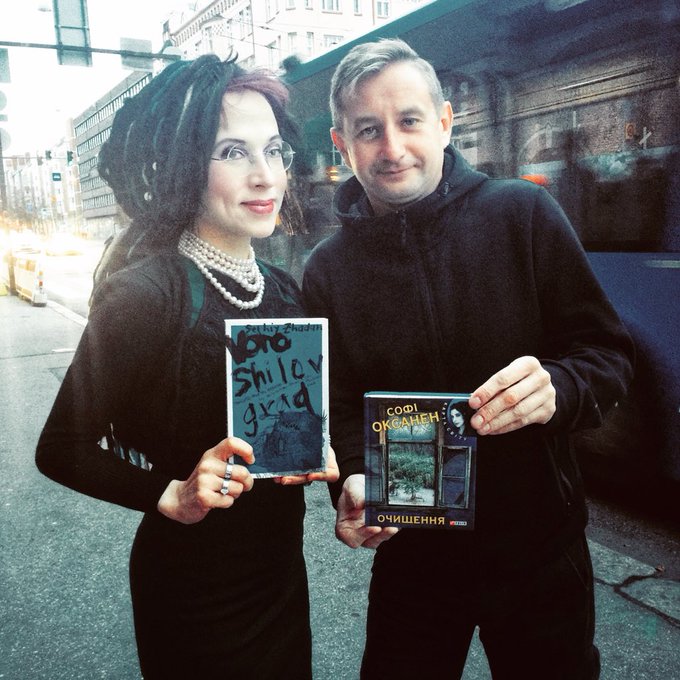
The Harriman Institute at Columbia University created an entire course on contemporary Ukrainian literature, because art, in the opinion of its authors, makes it possible to understand Ukraine's transformation in the 21st century better than «discussions of gas pipelines, Little Green Men and IMF loans». Besides Zhadan, their lectures are devoted to Taras Prokhasko, Andriy Kurkov, Sofia Andrukhovych and Yuriy Vynnychuk. In Britain, the latter is published by the aforementioned Glagoslav, and the 2016 collection «Fantastic Worlds of Yuriy Vynnychuk» earned praise in academic circles, although a reviewer from Cambridge University laments that the book includes only excerpts from the writer's novels. «Masterpieces like “Malva Landa” and “Tango of Death” deserve to be read in their entirety», she writes, calling the book an invaluable resource for all foreigners interested in the culture of western Ukraine.
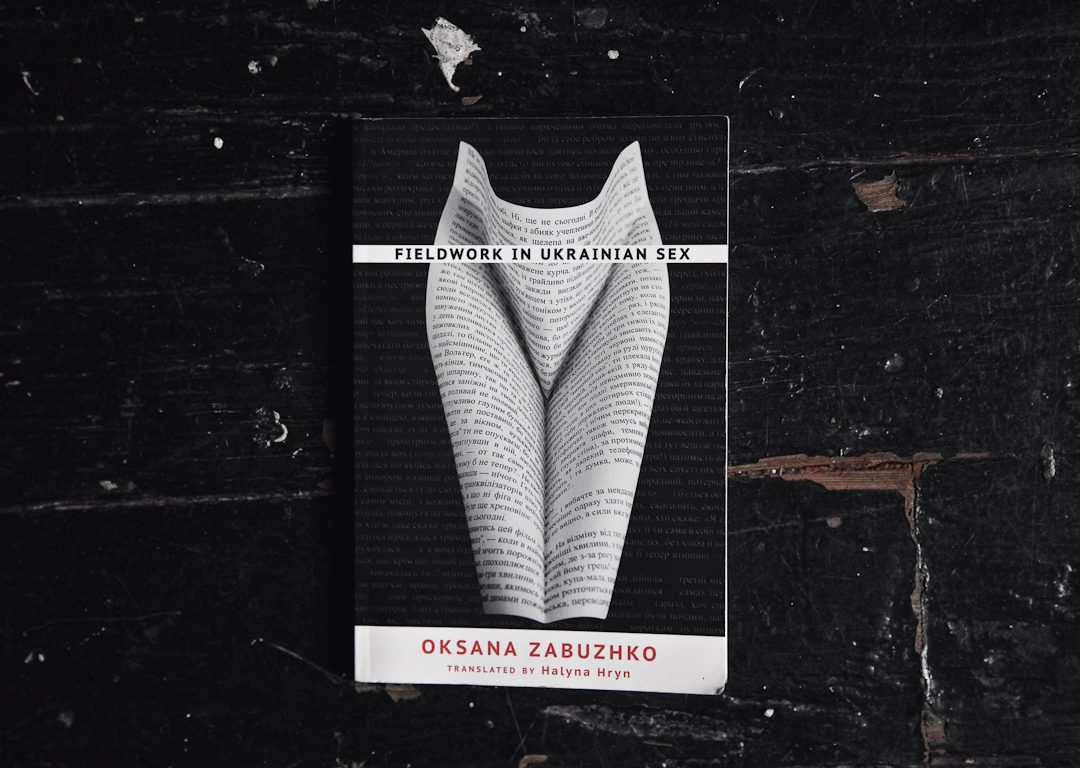
One of the first anthologies of suchukrlit published in the US was the collection «From Three Worlds», edited by Ed Hogan in 1996. The Boston Review, which reviewed the anthology after its release, especially noted two poets: Natalka Bilotserkivets and Oksana Zabuzhko, calling the latter «one of the most controversial figures in Ukrainian literature» (in a quarter century, it seems, little has changed in this respect). And the English translation of «Fieldwork in Ukrainian Sex», published in 2011, received mixed reviews: a reviewer from the University of Rochester writes that reading this book is «like having bad sex». The provocative theme, supposedly, brought the novel popularity at home, but in the US no one is surprised by it.
But a journalist for the art publication Numero Cinq found a very different comparison: «Reading Zabuzhko, she writes, is like being swallowed by a snake. Ukrainian history and identity swallow you whole». The author calls Zabuzhko a poetic genius, comparing her to the cult figure Sylvia Plath, and advises foreigners to get acquainted with the writer as soon as possible: «This book is not exclusively about what it is like to be Ukrainian. It is about what it is like to kneel under the weight of any culture».
It may seem that Yuriy Andrukhovych is read abroad only in the diaspora: his essay collection «My Final Territory», published in 2018 by the University of Toronto Press, did not receive loud reviews in the mainstream press. But this is a false impression: for example, poet John Hennessy, in a recent interview with the British publication The Berkshire Eagle, recommends Andrukhovych's «Songs for a Dead Rooster» alongside the English classic Lawrence Durrell.
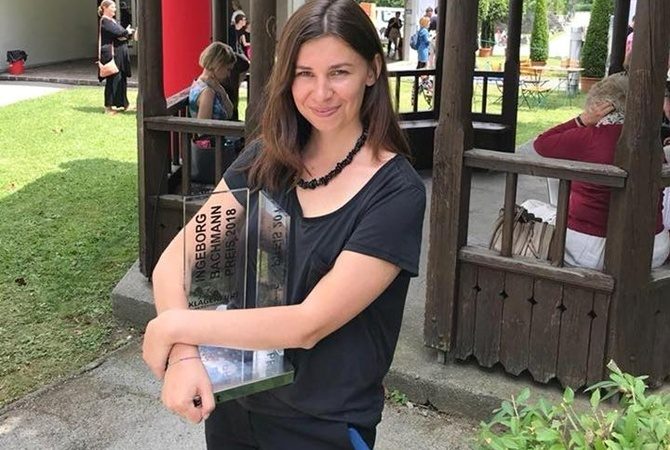
Unexpectedly, a broad foreign audience has been won over by Tanya Malyarchuk, whom people at home demanded be removed from the school curriculum in 2018 over «depraved» scenes. For example, a blogger from Greece writes that post-Soviet Ukraine in the novel «Biography of a Chance Miracle» reminded her of her own country, «which systematically lets down its people». In Austria and Germany the book received an especially warm reception (Falter Magazine even compares Malyarchuk to Kafka and Thomas Bernhard), but the writer herself actively works for this audience too. In 2018 she first tried writing a story in German and received for it the Ingeborg Bachmann Prize, worth 25,000 euros.
But this road was already paved by Lyubko Deresh in the 2000s: after the German-language edition of his novel «Cult» came out, the writer earned the title of «Ukrainian wunderkind» in Germany. His «Namir» somewhat cooled the ardor of foreign fans: the German daily Der Tagesspiegel stressed that Deresh is «one of those child prodigies whose talent outstrips their capacity for development».
Today, the foreign reader's contact with Ukrainian authors is stronger than ever. Just a few years ago, bloggers received a copy of «The Black Raven» from publishers in a dubious cover and tried to figure out how otaman differs from Ottoman, but now they can find Ukrainian novels to suit any taste. For instance, in 2018 polyglot translator Zenia Tompkins founded the TAULT agency, aimed at bringing domestic writers to the world market. Besides Malyarchuk and Deresh, it already represents Vasyl Makhno, Artem Chapai, Myroslav Laiuk and Oleksiy Chupa. American Caitlin Garcia created the English-language literary magazine Apofenie in 2017, promoting literature of Eastern Europe, where two «purely Ukrainian» issues have already appeared. The Idaho-based Lost Horse Press launched a Ukrainian poetry series, which has published collections by Iryna Starovoit and Yuriy Izdrykh. Last year it was presented at the Lviv Book Forum and Mystetskyi Arsenal.
Interest in «New East» in the West is far from exhausted: the University of Nebraska Press recently published another Chernobyl travelogue, and British traveler Rory MacLean came to Ukraine to compare current realities with the 1980s for his new book about the post-Soviet republics. So it can safely be said: demand for authentic voices of «suchukrlit» abroad will only grow.

Russian Attacks in Dnipropetrovsk Region: Two Killed, Seven Injured

Defense Forces Strike Four Russian Drone Control Points in Past Day, Including in Berdiansk

Britain Threatens Sanctions on Kremlin-Linked People; Poland Ready to Hand Ukraine Ammunition

Russia says it has completed "planned exercises" in the Black Sea

MVD: Fake Riots With Prop Blood Were Being Prepared Near Presidential Office

Law Enforcers Name Another Klitschko Deputy as Suspect

Berlin Holds Protest Against War in Ukraine; EU Prepares for Possible Russian Halt of Gas Supplies
North Korea Fires Ballistic Missile Over Record Distance in Five Years
Irish Fishermen Force Russia to Postpone Naval Drills

US sanctions in case of invasion of Ukraine could completely destroy Russia's economy, NYT reports
