
Lost Income, Fakes and 'Corona Chic': How Quarantine Affected Influencers
Which bloggers will win and lose from the epidemic – and who has already fallen ill.
Earlier this week, The Economist wrote that Instagram could help control the spread of the COVID-19 epidemic. The authors meant that geotags could help track how travelers spread the coronavirus from infection hotspots, but in practice social networks are also useful because they keep supplying us with entertaining content while cinemas and stadiums close. We explain how the epidemic has affected the daily lives and businesses of the main producers of such content – the much-talked-about influencers.
Some have caught the virus and continue to stream. Since the start of the coronavirus outbreak, it has become clear that many will use this news hook for their own purposes – and not always for good. In early February, a blogger and aspiring rapper from Canada going by the name Potok Philippe caused panic on a Toronto-Jamaica flight, declaring loudly: "I've just returned from Hunan province, the capital of the coronavirus. And I'm not feeling well." Flight attendants made him put on a mask and gloves, and the plane made an emergency landing, after which the man was arrested by police for disorderly conduct.
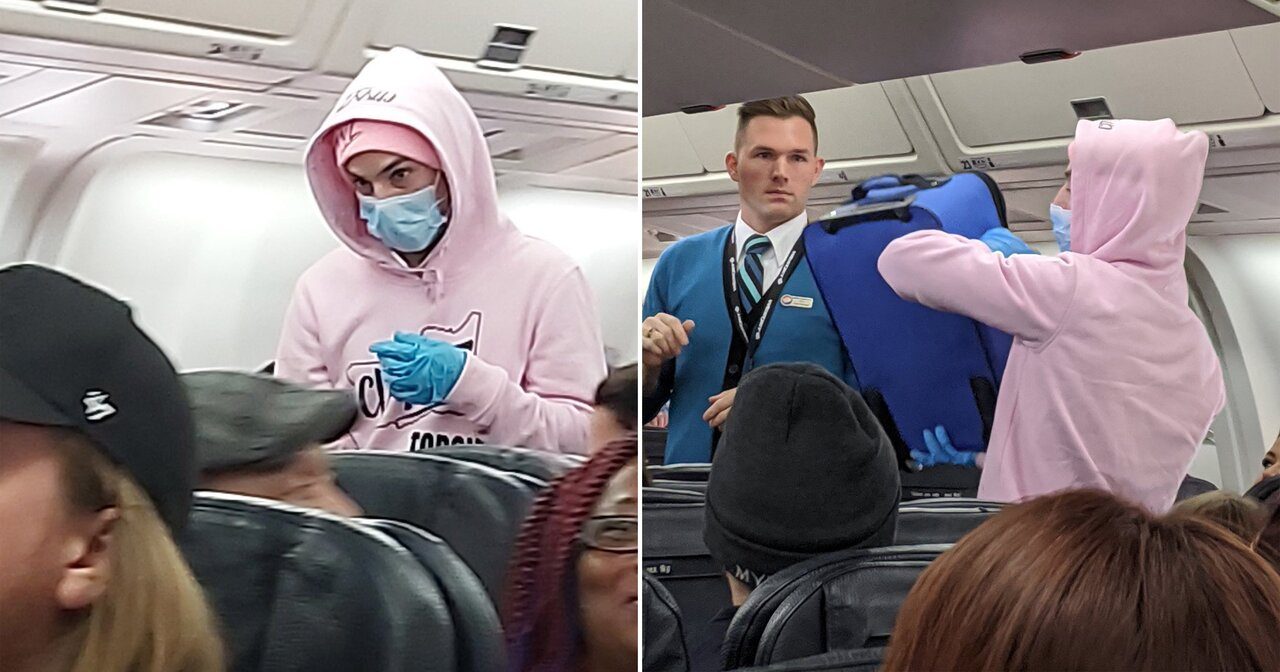
He admitted he did it for hype, and on the scale of his audience (30,000 Instagram followers) it actually worked – now there are 39,000. In his bio, the guy wrote "Wu Han Clan", parodying the name of the legendary rap group. But the comments under the 28-year-old prankster are full of insults and criticism. It is hard to imagine that after the plane stunt he would be offered a record label contract or an advertising partnership.
Meanwhile, more in-demand influencers are in no mood for laughter. 32-year-old lifestyle blogger Ariel Charnas from New York told her 1.3 million followers that her coronavirus test came back positive. "The body ache I felt today is incomparable to anything, – she describes the symptoms. – It feels like a bad dream, but I plan to bring a bit of normalcy back into our lives."
Berlin fashion blogger Carolin Lauffenburger (99,000 followers) recently said that her photographer husband had caught the coronavirus. They launched the hashtag #coronadiaries and write about everyday life in quarantine.
Many Instagram stars are using their status to demonstrate the importance of coronavirus testing. For example, travel blogger Talia Skains (498,000 followers) posted a story photo of having her temperature measured at the entrance to a bar in Bali. "Well done for introducing precautions!" she captioned the photo. But not all of her colleagues are staying calm as borders close.
Travel bloggers have lost their jobs. Quarantine has hit the incomes of many people who earn through social media: in an interview with BuzzFeed, one influencer admitted that his earnings in February had halved, while another complained that six advertising campaigns featuring him had been canceled. But travel bloggers have found themselves in a particularly precarious position. 45-year-old Sherry Griffiths can boast only 14,000 followers, yet she has occupied a profitable niche – reviewing cruise liners. With the start of the epidemic, all her plans for April were canceled. But instead of complaining, she calls on people to support workers in the travel industry. "I'm sending virtual hugs to travel agencies – they are under enormous stress right now," she writes.
Not everyone is so positive. Travel photographer Mel Vanderslice (185,000 followers) told Business Insider that many of her colleagues "have gone into panic mode." "Some press events have been frozen, some canceled. Companies definitely don't want influencers to catch the coronavirus during a trip," she says. Photographer Callum Snape, with 819,000 followers, wrote that he independently canceled all trips for the next two months, and one Italian luxury brand dropped a two-year contract it had planned to sign with him – all because the target audience is in China.
The gay couple behind the travel blog Nomadic Boys (124,000 followers) will not be able to attend a conference on LGBT tourism that was due to take place in Italy. "Loads of bloggers are out of income because all travel advertising campaigns have been canceled, – says Rob Taylor, owner of the blog 2 Travel Dads. – Now 80% of my friends are out of work and trying to figure out how to live without money." In his case, daily advertising income fell by 80% over the last week, and the site gets only 30% of its former traffic. Victoria Yore, founder of the travel blog Follow Me Away, has lost 90% of her earnings. But the audience of many bloggers is growing and engaging with posts much more actively – this could have a positive effect on their business in the longer term.
Subscriber engagement is growing. The marketing agency Obviously notes that over the past two weeks, sponsored posts on social media have received 76% more likes. Having analyzed data from more than 2,000 influencers on TikTok, the company found that audience engagement grew by 27% over the last month (we also wrote about which content is in demand on TikTok during quarantine).
Studies have shown that because of quarantine, Generation Z has started spending more time on TikTok, Instagram and YouTube. Moreover, isolation is forcing many traditional celebrities to try on the image of online influencers. Among the newly minted bloggers on TikTok are NBA stars LeBron James, Matisse Thybulle, Shai Gilgeous-Alexander and Trae Young. There is no escaping the basketball players taking part in dance flash mobs now.
But organic growth in likes and bored quarantined followers is proving insufficient for many bloggers. In early February, the number of Instagram posts with the hashtag #coronavirus was about 200,000, but since then it has grown to 6 million. Don't think these are all posts with tips on washing hands: most entries have nothing to do with the epidemic and simply exploit the popular tag. Controversial YouTuber Logan Paul still receives angry comments under this photo, captioned "f*** coronavirus," posted in January:
Income will fall, but orders will remain. The marketing platform IZEA has produced a 70-page report on how the global crisis will affect cooperation between bloggers and brands. According to its data, companies will pay influencers 13-25% less to promote their products. A survey showed that 66% of internet users will use social media more often in forced isolation, with 43% becoming more active on Instagram, 64% on YouTube and 12% on TikTok. 99% of respondents said they would shop online during quarantine, and 57% of them will continue ordering clothes and cosmetics: clearly, Instagram makeup gurus don't need to look for another job just yet.
At the advertising agency Ogilvy, they believe that quarantine is a time for brands to experiment with alternative promotion methods and earn the trust of bloggers. Sales director at the agency Takumi agrees. He says: "In the coming months, people will be inclined toward escapism and looking for things that help them feel better. Influencers are capable of providing such content." A manager at one media company, who asked to remain anonymous, said that producers of entertainment content have begun approaching them more often for collaborations with bloggers who can attract buyers from Generation Z. "Influencers will remain part of the advertising ecosystem because they can create and publish content without meeting anyone in person," explains James Nord, founder of the marketing platform Fohr.
'Corona influencers' have appeared on social media. The satirical publication Reductress jokes about careless advisers: "I was a nurse for Halloween in third grade. Here's what you need to know about coronavirus," muses a fictional heroine. The popularity of posts beginning with the words "I'm not a doctor, but…" is truly striking. One of the most viral (oops!) articles about coronavirus was written by entrepreneur Tomas Pueyo: more than 37 million people shared his text, including writer Margaret Atwood and beloved scientist Bill Gates, Steven Pinker.
The author did indeed subject data on coronavirus to impressive analysis – and presented it in an easily readable form. But not all bloggers use their popularity to spread accurate information: many speculate on conspiracy theories, and some promote radical views. For example, white nationalist advocate Tom Cawczynski launched the podcast Coronavirus Central, where at first glance he simply broadcasts current information about the infection, but conspiracy thinking of the kind "what if homeless shelters are the first step toward mass quarantine in the US?" keeps creeping into his commentary. The podcast has already entered Apple's top 20 in the Health & Fitness category.
Fitness trainer Crystal Nilsson, who has 600,000 followers, is also promoting dubious ideas under the guise of fighting coronavirus. She quotes words she heard on television that children have no "inflammation" from smoking, alcohol or sugar consumption, and therefore they don't get infected. In the same post with the hashtag #coronavirus, she advertises her "detox" course, priced from $97 to $494.
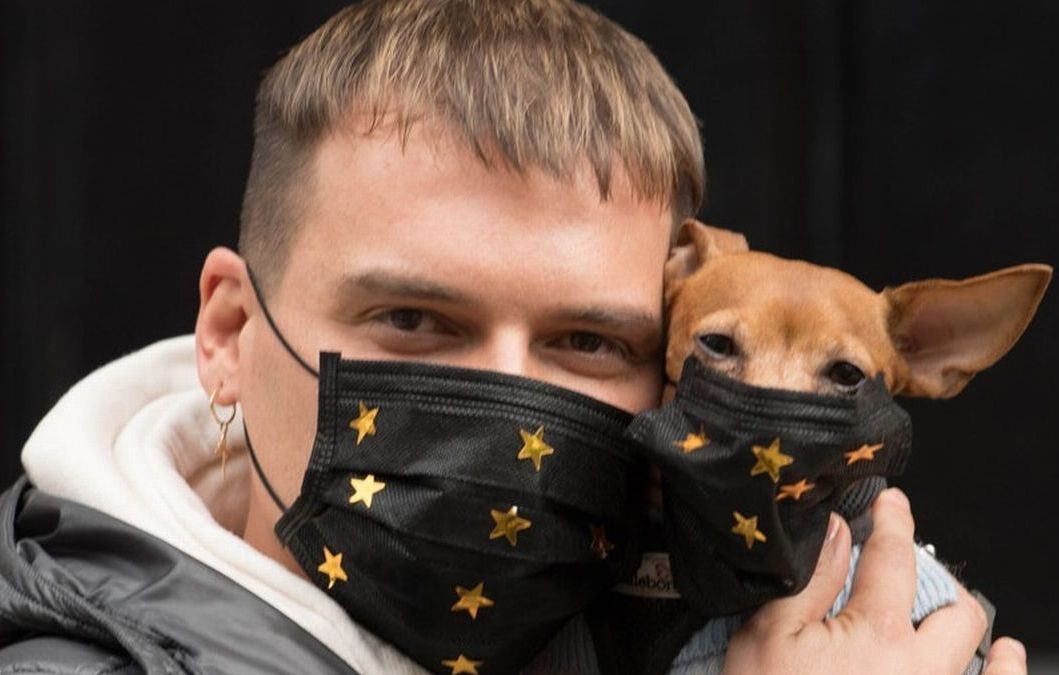
Fortunately, there are bloggers who prefer not to reason about what they don't understand, but simply set a good example. For instance, masks decorated like a disco ball are gaining popularity on Instagram. New York Post journalists dubbed the style "corona chic." And this blogger with 300,000 followers, who encrusts his phones, thermoses and glasses with rhinestones, appeared on camera with a new accessory:
After U.S. Surgeon General Jerome Adams urged Kylie Jenner to spread information about COVID-19, she too joined the ranks of 'corona influencers.' Jenner recorded a video in which she said she had already spent nine days in self-isolation and urged her followers to do the same.
Chinese bloggers are growing their audiences. The epidemic has greatly changed Chinese social media. The social network Xiaohongshu ("Little Red Book"), an analogue of both Instagram and Pinterest, has turned into a repository of "coronavirus" content. Many of its 300 million users are using the hashtag "go, Wuhan!", and one local resident decided to document his life in quarantine and instead of the usual 30-40 likes started getting up to 25,000. "Some influencers publish content about coronavirus because it's trending," says blogger Wen Wen, who has 613,000 followers. "This app is mostly popular among people interested in skincare, makeup and fashion, but now you can find posts like 'how to put on makeup so you don't get bored in isolation' and 'recipes for quarantine meals.'"
Although Chinese influencers are losing monetization even faster than their European colleagues, their audiences are becoming much more active. The Chinese New Year is traditionally a peak period for social media, but this year the figures exceeded all expectations. According to one study, 574 popular accounts on the video platforms Kuaishou and Douyin gained between 100,000 and 500,000 subscribers each in the period from January 20 to February 2. Comedy content is especially in demand: on Bilibili, the popularity of the 'humor' tag rose by 900% during the Lunar New Year. So it is worth heeding marketing experts: even under curfew conditions, people who can lift others' spirits will be in demand.
Marina Moynihan, TK Media

Russian Attacks in Dnipropetrovsk Region: Two Killed, Seven Injured

Defense Forces Strike Four Russian Drone Control Points in Past Day, Including in Berdiansk

Britain Threatens Sanctions on Kremlin-Linked People; Poland Ready to Hand Ukraine Ammunition

Russia says it has completed "planned exercises" in the Black Sea

MVD: Fake Riots With Prop Blood Were Being Prepared Near Presidential Office

Law Enforcers Name Another Klitschko Deputy as Suspect

Berlin Holds Protest Against War in Ukraine; EU Prepares for Possible Russian Halt of Gas Supplies
North Korea Fires Ballistic Missile Over Record Distance in Five Years
Irish Fishermen Force Russia to Postpone Naval Drills

US sanctions in case of invasion of Ukraine could completely destroy Russia's economy, NYT reports
