
Vaccine Against Panic: Six Realistic Movies About Epidemics
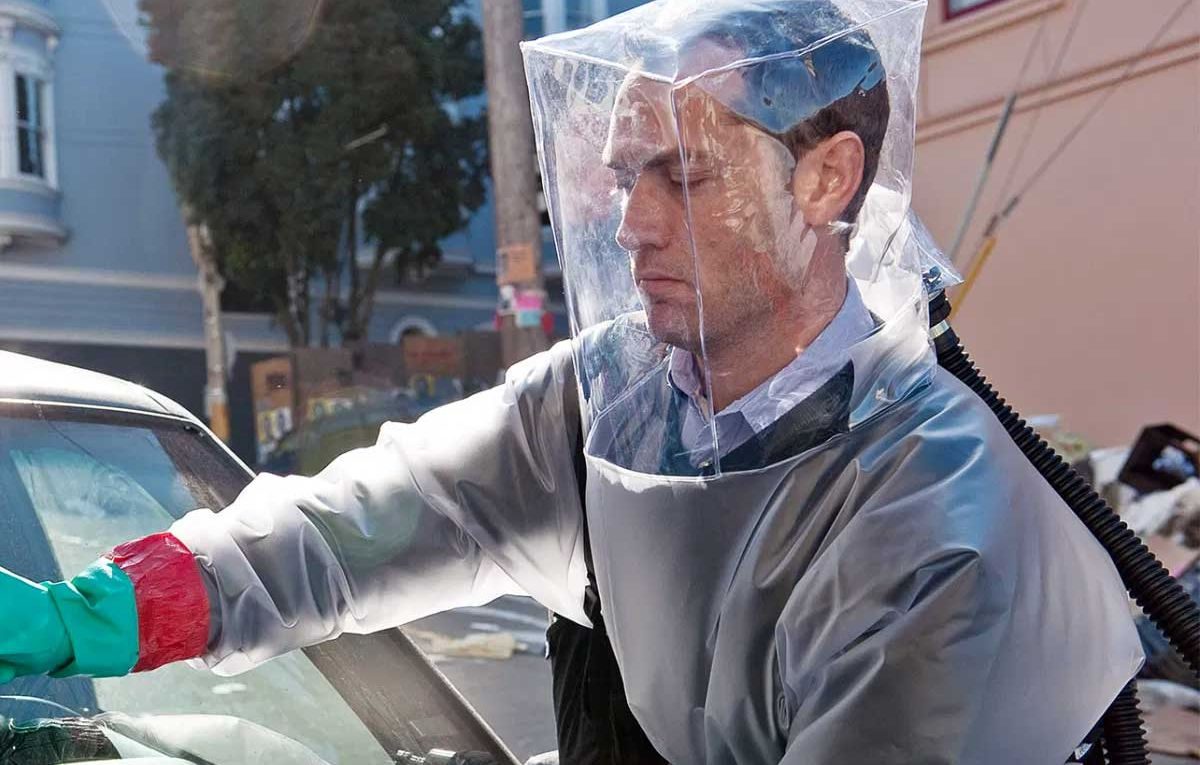
Fictional threats from which lessons can be learned.
With the start of the COVID-19 outbreak, people began finding “predictions” in pop culture. In Dean Koontz’s book “Eyes of Darkness,” a mention of the virus “Wuhan-400” was discovered. In connection with the cancellation of the NBA season, people recalled a scene from “Space Jam,” where basketball players put on gas masks so that an alien virus would not take away their athletic talents.
As tradition dictates, a prophecy was also found in “The Simpsons,” where Tom Hanks’s character supposedly self-isolated — but the link to the 2020 epidemic turned out to be far-fetched. Instead of searching movies for pseudo-signs, let’s recall films that genuinely and plausibly depicted pandemics and quarantines. Strangely enough, sometimes screenwriters understand the situation, if not better than doctors, then certainly better than politicians. And by the way, buckwheat makes excellent popcorn.
“Variola Vera” (1982)
The film by Serbian director Goran Marković retells the story of the last major smallpox outbreak in Europe — and does so in a way that turns it into a thriller. In 1972, a Muslim pilgrim caught the disease abroad and returned to Kosovo (in the film, to Belgrade), where he infected 175 people, 35 of whom died. From the standpoint of today’s global epidemic this sounds not very frightening, but the film scales the events down to the epicenter, where the invisible contagion rages like the horsemen of the apocalypse.
The patient is misdiagnosed, his roommates become infected, and the rest cannot leave the building sealed off by the authorities. The disease is stopped (or rather, halted), but draconian measures combined with concealment of facts lead to new tragedies.
Watching this masterpiece of Yugoslav cinema on a phone during a trip on a crowded bus is a masochistic adventure you won’t soon forget.
“Contagion” (2011)
Long before the COVID-19 outbreak made Steven Soderbergh’s film famous as prophetic, it appeared on lists of the most plausible films about epidemics. Pediatrician Paul Offit — one of the leading opponents of anti-vaccine activists and author of numerous books — praised the film for not ignoring science for the sake of drama.
The thriller begins with the heroine played by Gwyneth Paltrow returning from Hong Kong, bringing back some unknown infection as a souvenir. Soon the whole of Chicago is under quarantine: doctors predict that the new MEV-1 virus will infect one in 12 people worldwide, and up to 30% of those infected will die. Of course, this is many times more than in the real coronavirus epidemic, where mortality reaches 14% only in the age group over 80, but by the standards of science fiction cinema, Contagion presented a fairly sober and down-to-earth scenario.
By choosing a global virus as its central scare, one that can nonetheless actually be defeated, the film showed what situation the healthcare system, the scientific community and social services would find themselves in under such developments. Conspiracy-theory bloggers also make an appearance, but here at least they treat themselves with harmless (and useless) homeopathy, rather than advising their subscribers to drink bleach.
“Panic in the Streets” (1950)
When The Wall Street Journal publishes an article titled “Time for ‘Panic in the Streets’,” it does not suggest that its respectable readers run around the yard in pajamas and loot. On the contrary: it is time to stay home and watch a Hollywood classic. Elia Kazan’s tense noir Panic in the Streets tells of a pneumonic plague outbreak in Louisiana.
Unlike modern thrillers, the camera here rarely looks into hospitals: the action mostly takes place in officials’ offices, newspaper editorial rooms, police stations, ports — and in a Greek restaurant, from which the plague escaped. By the way, Slavic immigrants were initially the first to come under suspicion.
In addition to the atmosphere of shadowy New Orleans, this black-and-white film managed remarkably clearly to show how freedom of speech and safety can be mutually exclusive concepts during a crisis. The film’s main character, a doctor and officer (Richard Widmark), persuades city authorities to stay silent about the disaster so as not to sow panic. Had he tried to pull this off 70 years later, with social media, he would not have avoided becoming a villain. The film experienced another wave of popularity during the Ebola outbreak and thoroughly unnerved modern viewers because its characters constantly touch each other and their own faces.
“Outbreak” (1995)
The release of this film starring Dustin Hoffman coincided with the Ebola outbreak in Zaire. The fictional Motaba virus terrorizing California also comes from Zaire — but this is not a coincidence or prophecy, but the result of the authors being inspired by a 1994 book on Central African fevers.
The zero patient in the film is a lab employee who steals a capuchin monkey and tries to sell it on the black market. Then comes the chain of events typical of disaster films, in the style of “the horse went lame — the commander was killed”: a medic breaks a vial of infected blood, the virus mutates into a flu-like form capable of felling dozens of people in a single movie theater (do you feel familiar chills?), and a doctor studying the new disease manages to prick himself with an infected needle.
Despite (or thanks to) the fact that the film is rather pessimistic — the military in it plans to bomb the city to stop the spread of the virus — it coincided with the mood of 2020: recently, Outbreak entered the top three most popular films on Netflix among Americans.
“Virus” (Gamgi, 2013)
If the deadly but containable viruses in the other films listed fail to sufficiently thrill your nerves, and you have already watched the second season of “Kingdom” with its zombie epidemic, pay attention to this South Korean thriller. Virus, directed by Kim Sung-su, took the best (in the sense of the scariest) from the real “bird flu” epidemic and zombie action films: the infected in the film die within 36 hours amid streams of black vomit.
But the most chilling moments, as is customary, relate not to changes in individual organisms but to changes in society as a whole. When the infected are isolated in a stadium, tension begins to rise exponentially: harsh quarantine conditions, nerve-racking shooting of birds, and rumors that people are being burned alive lead to riots and breaches of cordons.
Amid the coronavirus epidemic, the film rose in the IMDb popularity rankings by more than 700 places.
“It Comes at Night” (2017)
As critics noted after the release of this grim horror drama, It Comes at Night is frightening precisely because of its realism. Although an unknown contagion causing blisters all over the body and traditional zombie-style hacking has engulfed the entire planet, the action of the film is confined to a family living far from civilization. A24, which traditionally releases independent films on the borders of genres, once again defied audience expectations and, instead of a zombie thriller, presented the world with a depressing film about paranoia, which in isolation tends to reach critical mass.
The plot follows the head of a family who lets several healthy strangers into the house so it is easier to defend against looters and the infected. But their resistance cell is destroyed not by the disease, but by their inability to follow rules once established: going out at night is sometimes allowed and sometimes not, and the oxygen mask may be worn or forgotten. It Comes at Night left behind a chilling message not so much about epidemics as about the politics of paternalism: a tyrannical authority (in this case the father of the family) may successfully protect its subjects for a while, but as soon as it becomes inconsistent, everything collapses.
Marina Moynihan, TK Media

Russian Attacks in Dnipropetrovsk Region: Two Killed, Seven Injured

Defense Forces Strike Four Russian Drone Control Points in Past Day, Including in Berdiansk

Britain Threatens Sanctions on Kremlin-Linked People; Poland Ready to Hand Ukraine Ammunition

Russia says it has completed "planned exercises" in the Black Sea

MVD: Fake Riots With Prop Blood Were Being Prepared Near Presidential Office

Law Enforcers Name Another Klitschko Deputy as Suspect

Berlin Holds Protest Against War in Ukraine; EU Prepares for Possible Russian Halt of Gas Supplies
North Korea Fires Ballistic Missile Over Record Distance in Five Years
Irish Fishermen Force Russia to Postpone Naval Drills

US sanctions in case of invasion of Ukraine could completely destroy Russia's economy, NYT reports
