
Why the Attack on Medvedchuk Is a Winning Story for Zelensky
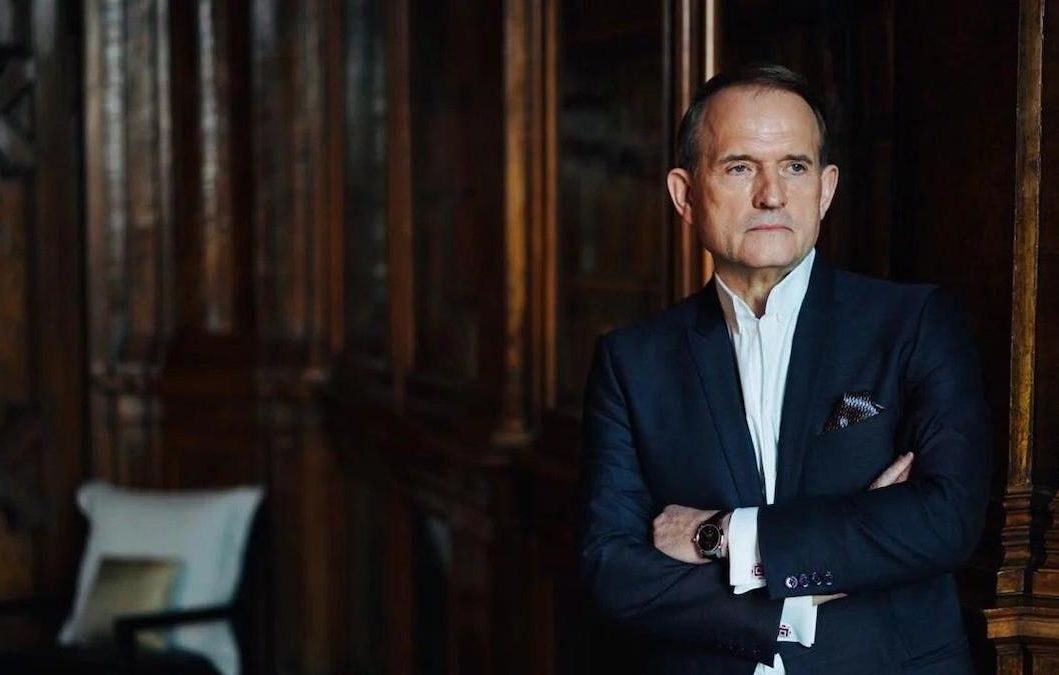
We read "Kozak" and mean "Medvedchuk."
On February 2, a bolt of lightning struck Ukraine's information space: President Volodymyr Zelensky enacted National Security and Defense Council sanctions against Viktor Medvedchuk ally Taras Kozak and his companies, the best known of which are the television channels 112, ZIK and NewsOne.
How this will end for the parties is not yet known. Obviously, courts with their unpredictable rulings lie ahead. But the motives behind Zelensky's actions can be understood already now.
Muzzling the OPZZh propaganda megaphone
In the latest polls, the Opposition Platform – For Life came close to Servant of the People, with a gap of about 4%. Undoubtedly, one of the sources of the growth in ratings of a force widely considered pro-Russian is a media resource made up of three fairly popular news channels, which formally falls under Taras Kozak but is firmly linked to Putin's godfather Viktor Medvedchuk.
Taking "ZIK," "NewsOne" and "112" off the air could significantly help silence the Kremlin's voice in Ukrainian society (which would certainly have gained momentum and pressure on Bankova after the news that the Russian Sputnik V vaccine allegedly showed nearly 92% efficacy). And most importantly: shutting down the channels is legitimized by the support of a significant part of society, while only pro-Russian marginal figures are shouting about violations of freedom of speech.
Biting into Poroshenko's ratings
A large part of the pro-Western electorate backed Zelensky in the presidential election due to their negative attitude toward Petro Poroshenko, but disappointment with the actions of the current authorities was gradually returning points to the fifth president of Ukraine.
Indeed, many of Zelensky's actions, primarily the disrupted operation to detain the "Wagner" fighters, have worked in the Kremlin's favor.
The blow against Medvedchuk was joyfully received by this very pro-Western electorate regardless of their attitude toward Zelensky himself, so it gives him a chance to take back part of the rating from Poroshenko by trampling on his electoral field.
Thus, with one blow, two nearest competing forces will be politically hurt. Moreover, Poroshenko, directly or indirectly, will also have to publicly support Zelensky's actions.
Signaling to Kolomoisky what may happen to his media assets
The expulsion of Oleksandr Dubinsky from the Servant of the People faction after US sanctions could threaten not just the loss of support from Ihor Kolomoisky's 1+1 Media holding, but also the birth of yet another opposition media force. This time an even more powerful one than the three second-tier channels.
Of course, pulling off the same story with 1+1 or any other channel will be much harder, but the point is different: Zelensky's unprecedented measures themselves show that this is at least theoretically possible. Never before in Ukraine has the broadcasting of TV channels been blocked, and here is a clear signal that nothing is impossible. The mechanisms exist and can work.
And most importantly, once again: most people will not take this as a manifestation of censorship. When Poroshenko banned Russian social networks, the resistance was many times greater.
Signaling to Biden
In an interview with HBO, Zelensky, to put it mildly, bungled his question to new US President Joe Biden: "Why are we not yet in NATO?" And the comparison of the storming of the Capitol with two Maidans was completely out of place.
Before this, there was a series of other actions that the ruling Democratic Party could regard as unfriendly: dismissing pro-Western people from government and trying to launch an investigation into Biden himself, for example.
By expelling Dubinsky from the faction and taking an openly anti-Russian step with Kozak's assets, the Ukrainian authorities are showing Washington that they want to keep working closely and remain a priority of US foreign policy.
The timing was chosen deliberately and looks successful. On the day Alexei Navalny was sentenced in Russia, at a moment when Putin's government should focus more on internal squabbles than on Ukraine. A few days before Biden publicly talks about his actions in foreign policy.

Russian Attacks in Dnipropetrovsk Region: Two Killed, Seven Injured

Defense Forces Strike Four Russian Drone Control Points in Past Day, Including in Berdiansk

Britain Threatens Sanctions on Kremlin-Linked People; Poland Ready to Hand Ukraine Ammunition

Russia says it has completed "planned exercises" in the Black Sea

MVD: Fake Riots With Prop Blood Were Being Prepared Near Presidential Office

Law Enforcers Name Another Klitschko Deputy as Suspect

Berlin Holds Protest Against War in Ukraine; EU Prepares for Possible Russian Halt of Gas Supplies
North Korea Fires Ballistic Missile Over Record Distance in Five Years
Irish Fishermen Force Russia to Postpone Naval Drills

US sanctions in case of invasion of Ukraine could completely destroy Russia's economy, NYT reports
