
The ‘Wagner Fighters’ Case: Why the Treason Version May Be Both True and False
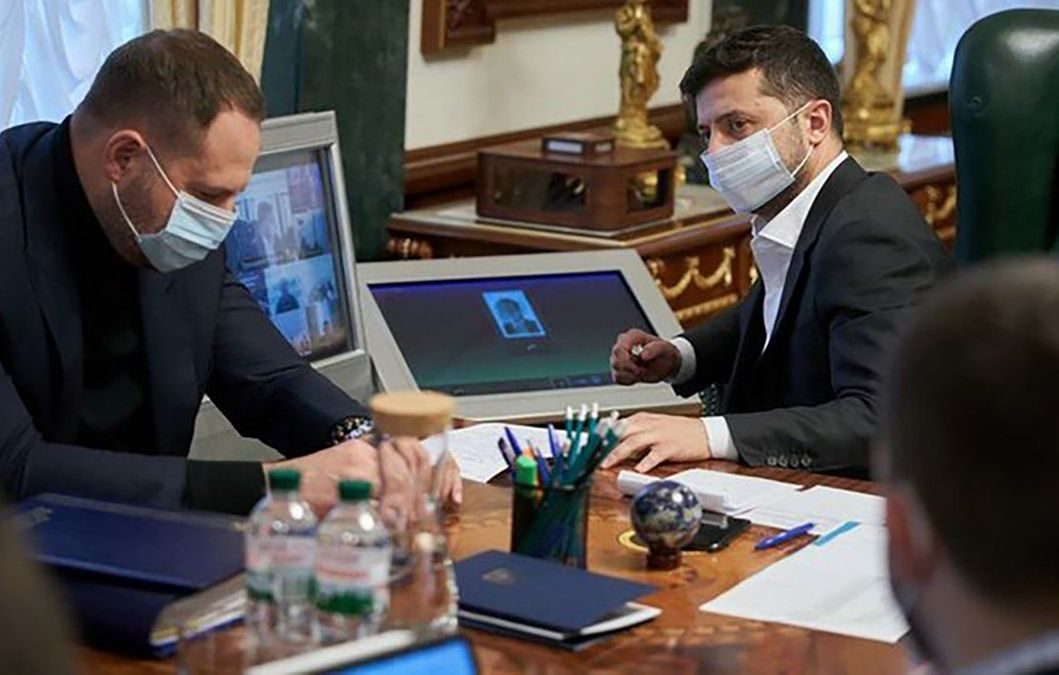
Documents, Yermak’s failures, and the lack of an investigation into the Russian position and the threat of international conflict.
The Wagner case dealt the biggest blow to Vladimir Zelensky’s reputation — for part of the population, he or at least his inner circle have essentially become traitors to Ukraine. How so? And why could this whole story be both true and fiction.
What happened
On the eve of the presidential elections in Belarus, on July 29, 33 members of the Russian private military company Wagner were detained. Private — only formally, since everyone knows about the Kremlin’s influence. Belarusian President Alexander Lukashenko then perceived this as a threat of Russian interference in the elections.
Ukraine immediately requested the extradition of the Wagner fighters from Belarus, because members of this group had taken part in combat in Donbas on the side of the militants, but the expectations of the Ukrainian authorities were disappointed: shortly before the presidential elections, Lukashenko returned the militants to Russia, reconciling with Vladimir Putin — amid popular protests in Belarusian cities, he needed support from the Kremlin.
But the real passions flared up in Ukraine after the August 17 statement by Yevgeny Shevchenko, a media agent of NABU, that the “Wagner fighters” ended up in Belarus not at all to threaten Lukashenko’s regime, but that it was a carefully planned SBU operation to lure war criminals out of Russia and subsequently prosecute them in Ukraine.
Ukrainian counterintelligence allegedly interviewed each of the Wagner fighters, documenting their confessions to war crimes in Ukraine, which they boasted about while hoping to receive a new assignment in Syria and Venezuela. They were gathered in Belarus and bought tickets for a flight from Minsk to Istanbul. When the plane flew over Ukrainian territory, an SBU agent on the same flight was supposed to “feel unwell,” which would force the crew to make an emergency landing in Kyiv. It was planned that Alpha would board the plane disguised as medics and detain all the Wagner fighters.
SBU Deputy Chairman Ruslan Baranetsky reported the operation to Ukrainian President Volodymyr Zelensky in the presence of Andriy Yermak. The head of the Presidential Office demanded the operation be canceled because a prisoner exchange with Russia was scheduled for four days later. However, the operation could not be canceled, because the Wagner fighters were already on their way to Minsk, so it was agreed to delay it by the same four days.
Next, according to Shevchenko, information was leaked to Russia’s FSB, which informed the Belarusian KGB. The “Wagner fighters” were detained in Belarus and returned to Russia a few days later. Andriy Yermak was subsequently openly called a “Russian intelligence agent.”
On August 18, Censor.net editor-in-chief Yuriy Butusov wrote a post in which he confirmed all of Shevchenko’s statements but added other details: on August 3, Zelensky held a meeting at which the head of the Main Intelligence Directorate of the Ministry of Defense, Vasyl Burba, named betrayal as the cause of the operation’s failure and demanded a check of all people who knew about the operation. On August 5, Burba was dismissed.
On August 18, journalist Yanina Sokolova published a video of conversations between several “Wagner fighters” and an SBU agent who was recruiting them for a new assignment, asking in detail about their experience in Donbas.
This blow ultimately became the most severe for Vladimir Zelensky during his 15 months in office. If previously he was accused mostly of incompetence and susceptibility to Russian pressure, and of covering up corruption in his inner circle, then at this moment many came to associate him with direct betrayal.
Why this could be true
The “Wagner fighters” documents
Throughout this scandalous story, copies of passports, photos of awards and other documents of several of the detained “Wagner fighters” were published via journalist Yanina Sokolova (in that same video), and so far no one has been able to reasonably doubt that they are genuine.
This indirect evidence gives grounds to believe that an operation to detain the Wagner fighters was indeed carried out and was disrupted for some reason. Unless, of course, these were “leaks” from Russia, which the same dismissed Burba hinted at after Butusov’s post.
Ukrainian authorities do not want to investigate
Whether the information about the “leak” to the FSB is true or not — it must be investigated. But ultimately the presidential team, it seems, decided to hush up everything that could be hushed up, and even tried to minimize the spread of this information through friendly media.
Almost three weeks have passed, but still there are no open cases from any law enforcement agency, and not even a temporary investigative commission has been created in the Verkhovna Rada. If this is slander, then what prevents an investigation and proof of the Ukrainian authorities’ non-involvement in the leak of information?
Yermak and his failures
Head of the Presidential Office Andriy Yermak currently has no equal in the country in two categories: influence over power and failures. Enormous powers, which are not spelled out in the Constitution at all, go hand in hand with media worthlessness: he was suspected of treason long before the Wagner scandal, and the blatant covering up of corruption (for example, of his brother Denis), and the many appointments of utterly vile characters to government positions after his promotion — all of this is gradually erasing from Vladimir Zelensky the reputation of a man who came to fight corruption, not to lead it.
There have been rumors since he was appointed Zelensky’s assistant that Yermak, to put it mildly, is a figure very convenient for Russia. Things only escalated from there, and the apogee was the appointment of the notorious Vitold Fokin to the negotiating TCG (Trilateral Contact Group) right in the midst of the Wagner scandal. A few days later Fokin gave a scandalous interview about the need to grant amnesty to the militants, among other things, causing a wave of indignation. Moreover, it was a very predictable one: Fokin’s pro-Russian position had been known before his appointment.
After Fokin’s remarks, TCG head Leonid Kravchuk shifted the blame onto Zelensky for appointing a prime minister from the time of Kravchuk’s own presidency, but the idea that Zelensky himself thought to pull the long-forgotten Fokin out of his sleeve is very doubtful. Of course, suspicion once again fell on Yermak, without whom Zelensky is now almost impossible to see anywhere.
Given Yermak’s entire background, the worthlessness of his justifications through bombastic, empty posts on Facebook and very uncertain speeches in the media, the suspicious lack of interest in him from law enforcement agencies, and failures in confrontations with Russia on the diplomatic front, suspicions about his possible role in leaking information are not without reason.
Why this could be false
Russia supports the version that the SBU gathered the “Wagner fighters” in Belarus
In late August, Russian President Putin in an interview practically confirmed the version of those who accuse the Ukrainian authorities of treason, stating that the “Wagner fighters” in Belarus were gathered by Ukrainian and American intelligence services.
If this is so, then the suspicion that Yermak is a person playing on Russia’s side strengthens, but is it really in Russia’s interest to raise the risks for “its own man”?
And the classic dilemma: can one believe Russia in anything at all?
Is it realistic to carry out detentions on a Turkish Airlines plane?
Documents published by European Solidarity MP Vladimir Ariev show that the “Wagner fighters” were supposed to fly on a Turkish Airlines plane.
The “Wagner fighters” were gathering in Belarus because planes from Russia are banned from flying over Ukrainian territory. The Minsk–Istanbul Turkish Airlines flight was precisely supposed to fly over Ukraine. At the same time, Istanbul is a huge air hub, from which it is convenient to deliver people to any point in the world, even in the coronavirus era.
Planes do make emergency landings when passengers feel unwell (the case in Russia involving Navalny — one of the most recent prominent examples), and the SBU agent could surely have calculated the right time for his fit so that the crew would land the plane specifically in Kyiv.
But could the Alpha group have boarded the plane of a company from another (and officially friendly) country and detained three dozen passengers there? This is doubtful, because such actions could provoke an international scandal.
***
In any case, Zelensky’s team has taken a bad path. If this whole scandal was instigated by ill-wishers, then the taboo on the topic in the media and the suspicious inaction of law enforcement agencies on this issue only strengthen suspicion. So does the very appointment of Vitold Fokin as a TCG member.

Russian Attacks in Dnipropetrovsk Region: Two Killed, Seven Injured

Defense Forces Strike Four Russian Drone Control Points in Past Day, Including in Berdiansk

Britain Threatens Sanctions on Kremlin-Linked People; Poland Ready to Hand Ukraine Ammunition

Russia says it has completed "planned exercises" in the Black Sea

MVD: Fake Riots With Prop Blood Were Being Prepared Near Presidential Office

Law Enforcers Name Another Klitschko Deputy as Suspect

Berlin Holds Protest Against War in Ukraine; EU Prepares for Possible Russian Halt of Gas Supplies
North Korea Fires Ballistic Missile Over Record Distance in Five Years
Irish Fishermen Force Russia to Postpone Naval Drills

US sanctions in case of invasion of Ukraine could completely destroy Russia's economy, NYT reports
